

SYPEN
A new solo exhibition by Hannah Morgan
On view at Xxijra Hii | September 26th - October 24th 2026
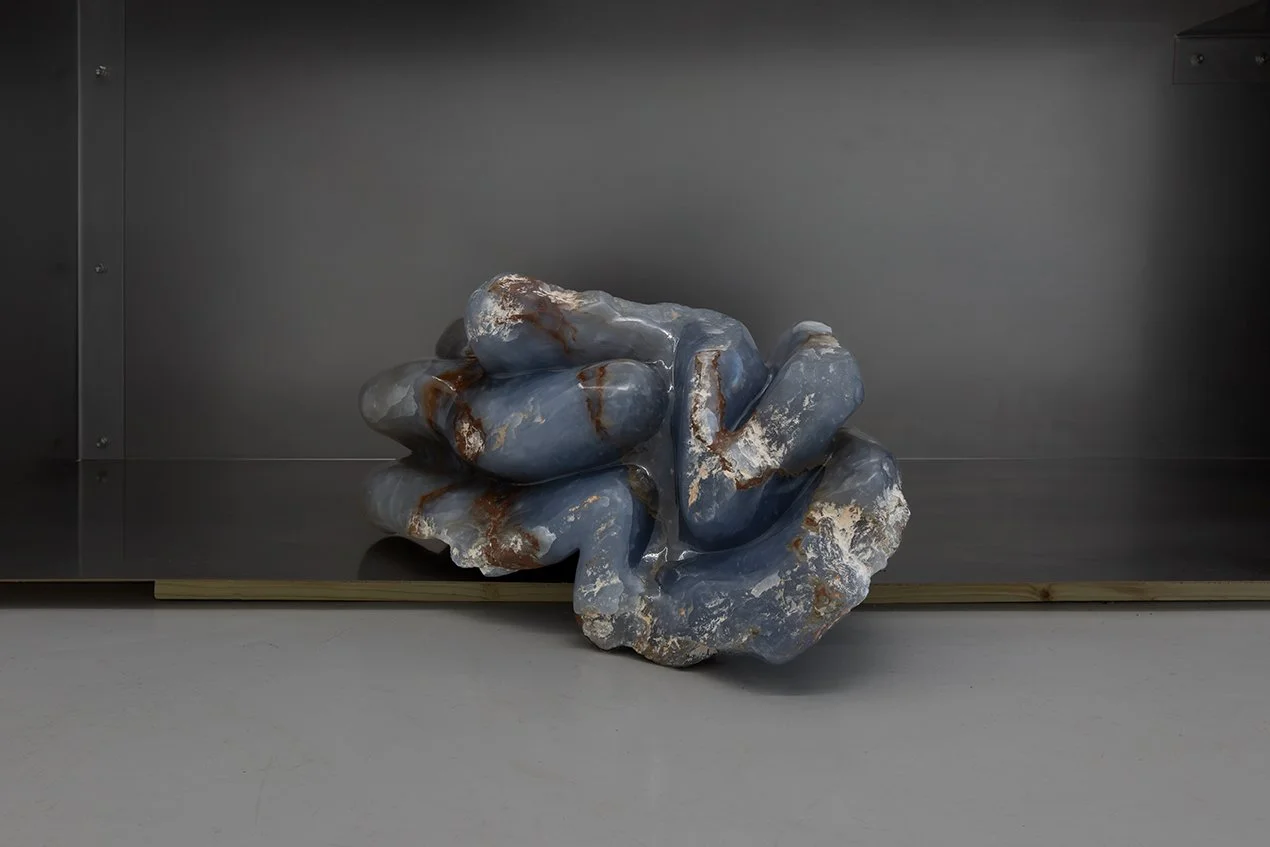
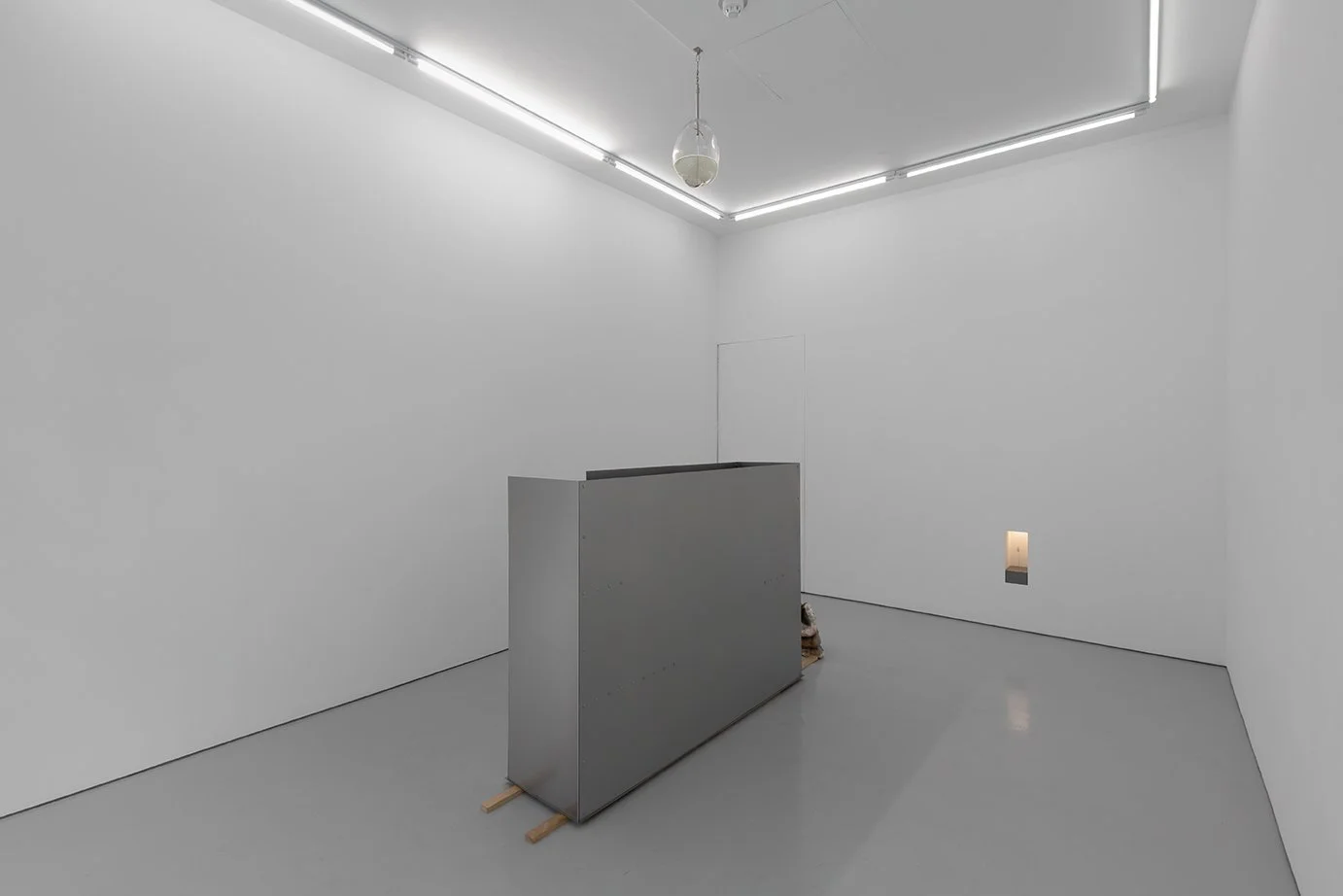
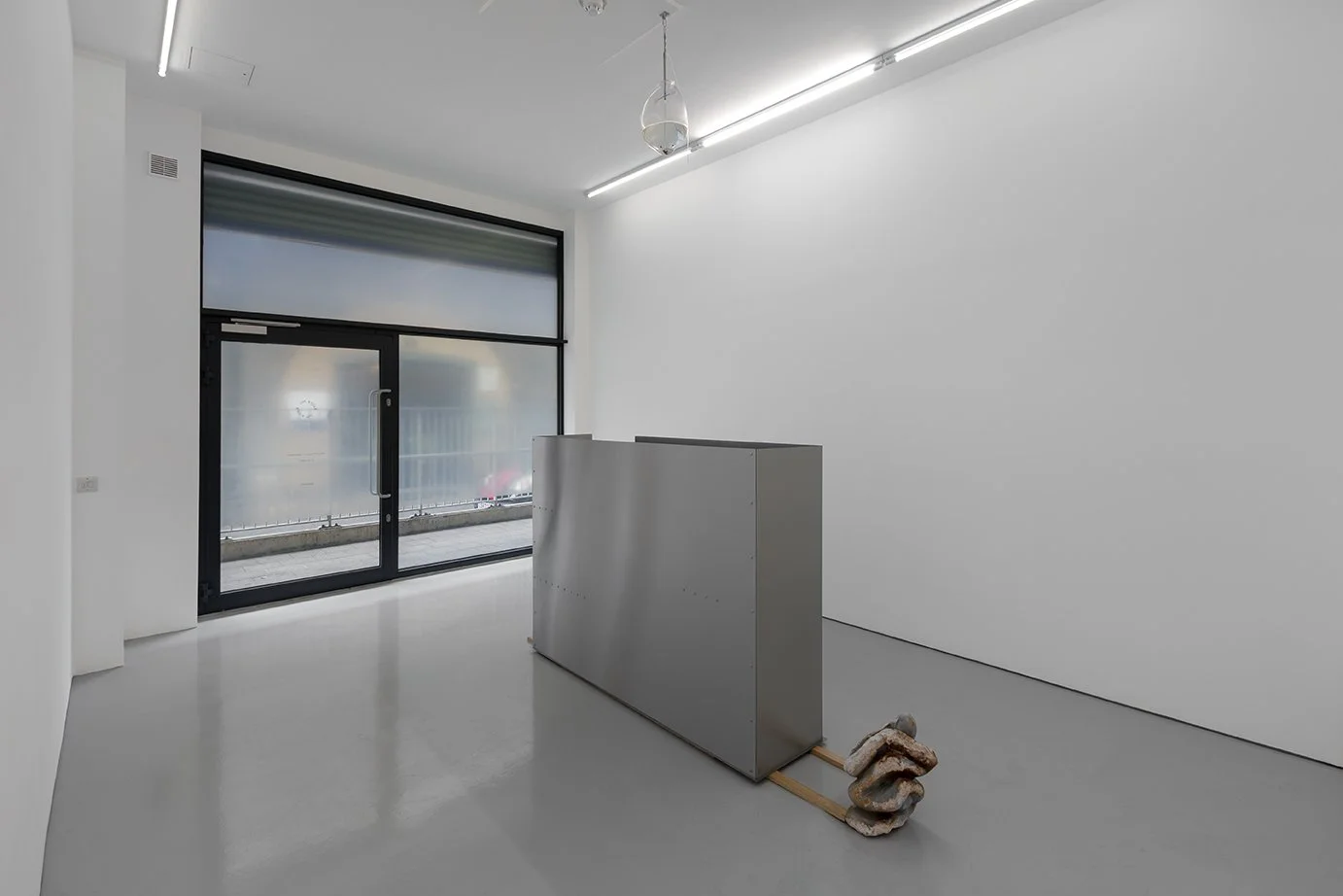
Continuing her journeys underground, Morgan turns to anhydrite and water - materials that appear oppositional, yet become entangled through transformation. On contact with water, anhydrite begins to shift, crack and become gypsum; stone moving from monument towards something unstable, vulnerable and alive.
Œuvres disponibles
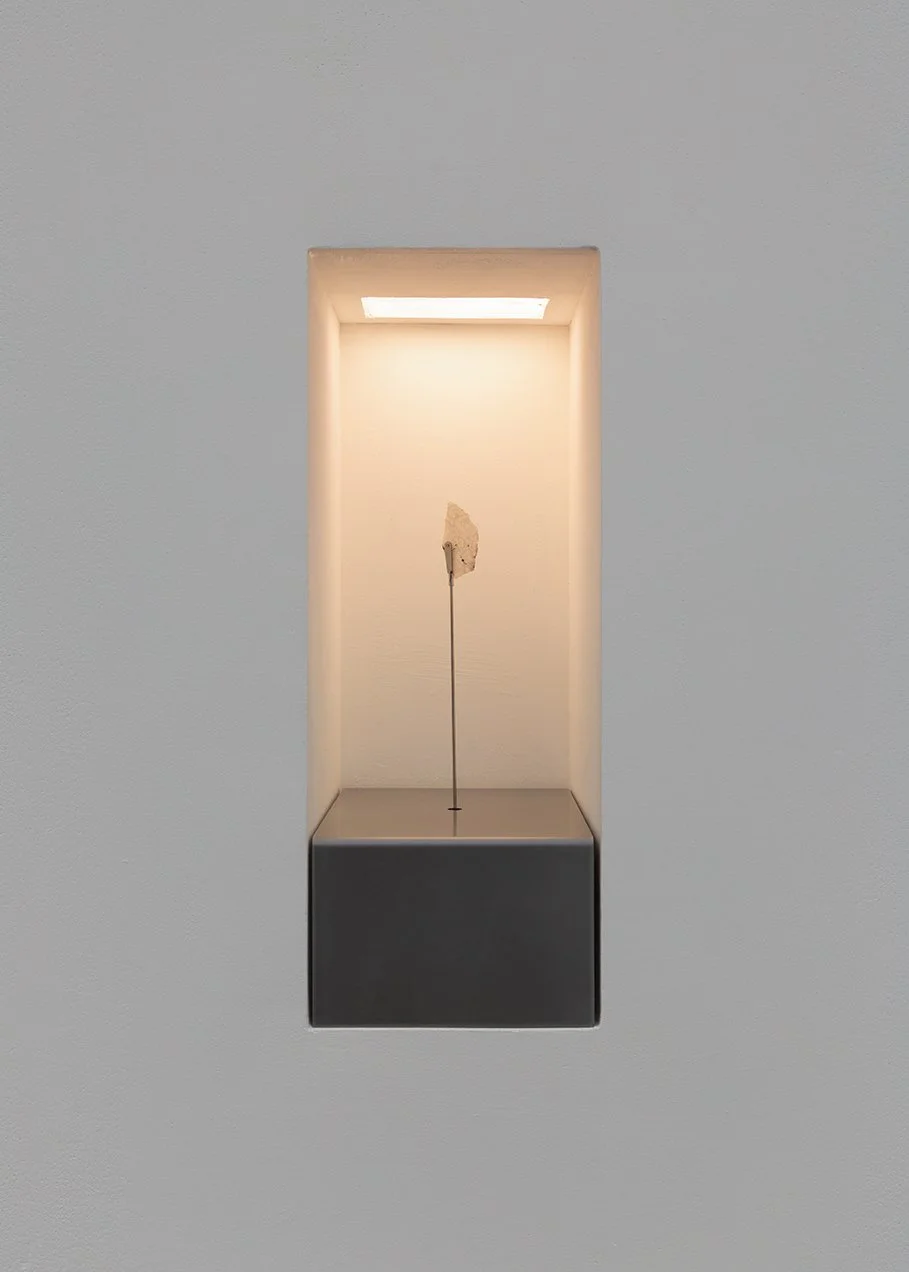
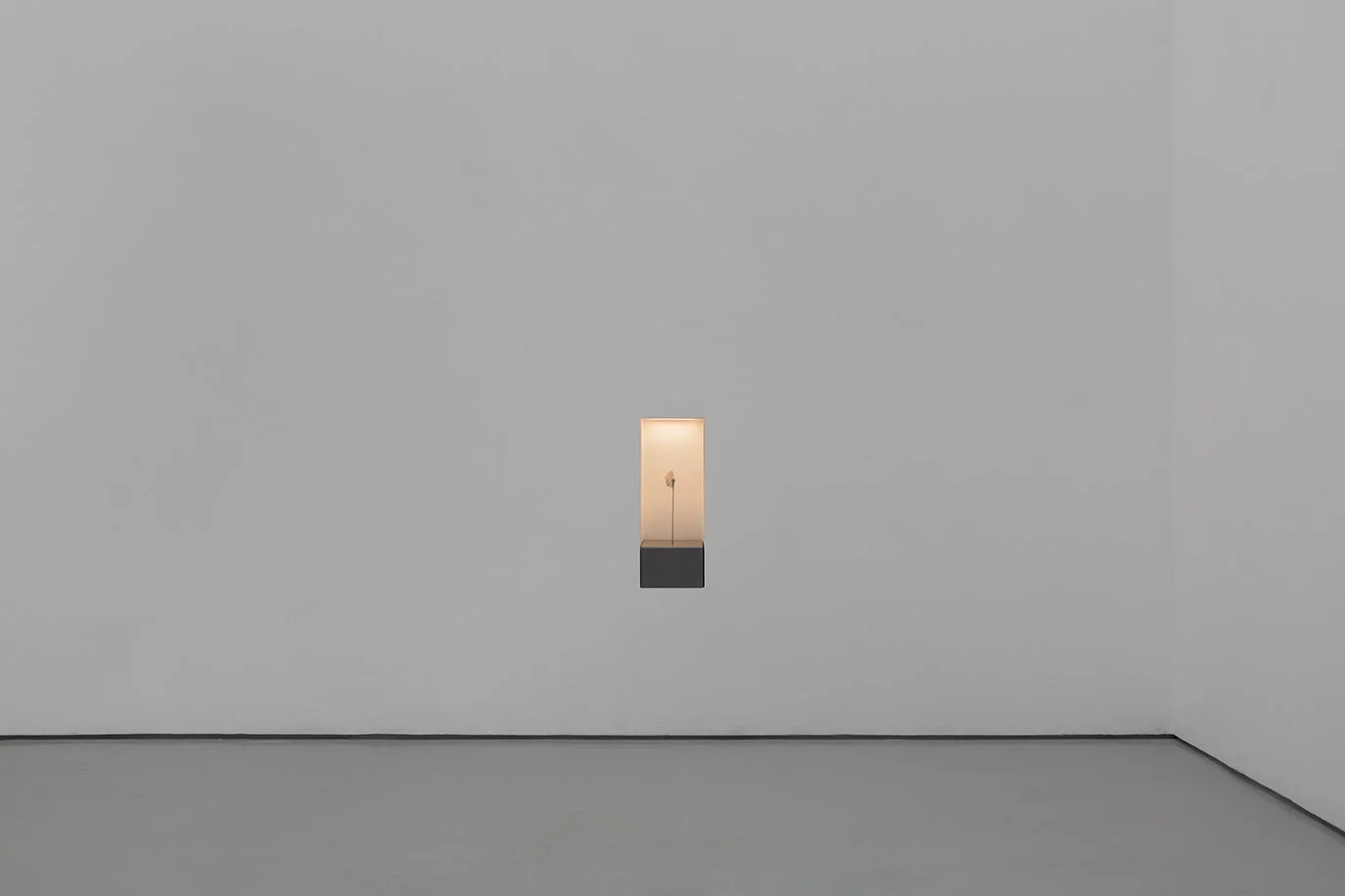
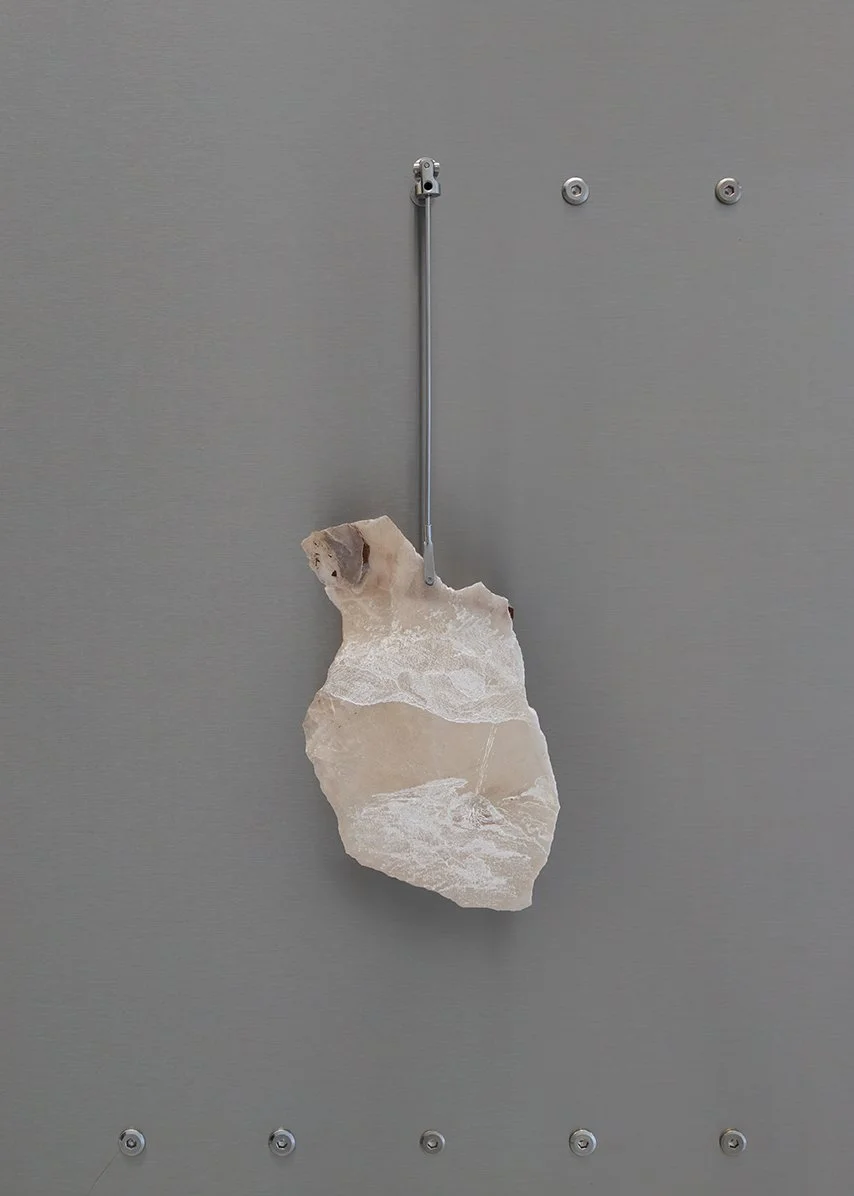
Etched satin spar collected at the water source, stainless steel rod and platform, continuous rotation mechanism, ply housing
19 x 15 x 18 cm
2026
£2,500
Renseignez-vous ici
In her research of extracted matter at the periphery of a mine, Morgan turns her attention to Anhydrite and water. The two seem oppositional - Anhydrite, means ‘no water’ - yet there is alchemy present. On contact with one another the stone begins a chemical change - the surface morphing and cracking over time becoming gypsum. For Morgan this vulnerability in material shifted ideas of monument as a fixed intention of sculptural form. Reflecting the instability of the time we're in she plays with slippages between industrial landscapes, personal labour, mourning, and collapsible matter - both material and imagined.
Cliquez sur une œuvre pour voir d'autres images
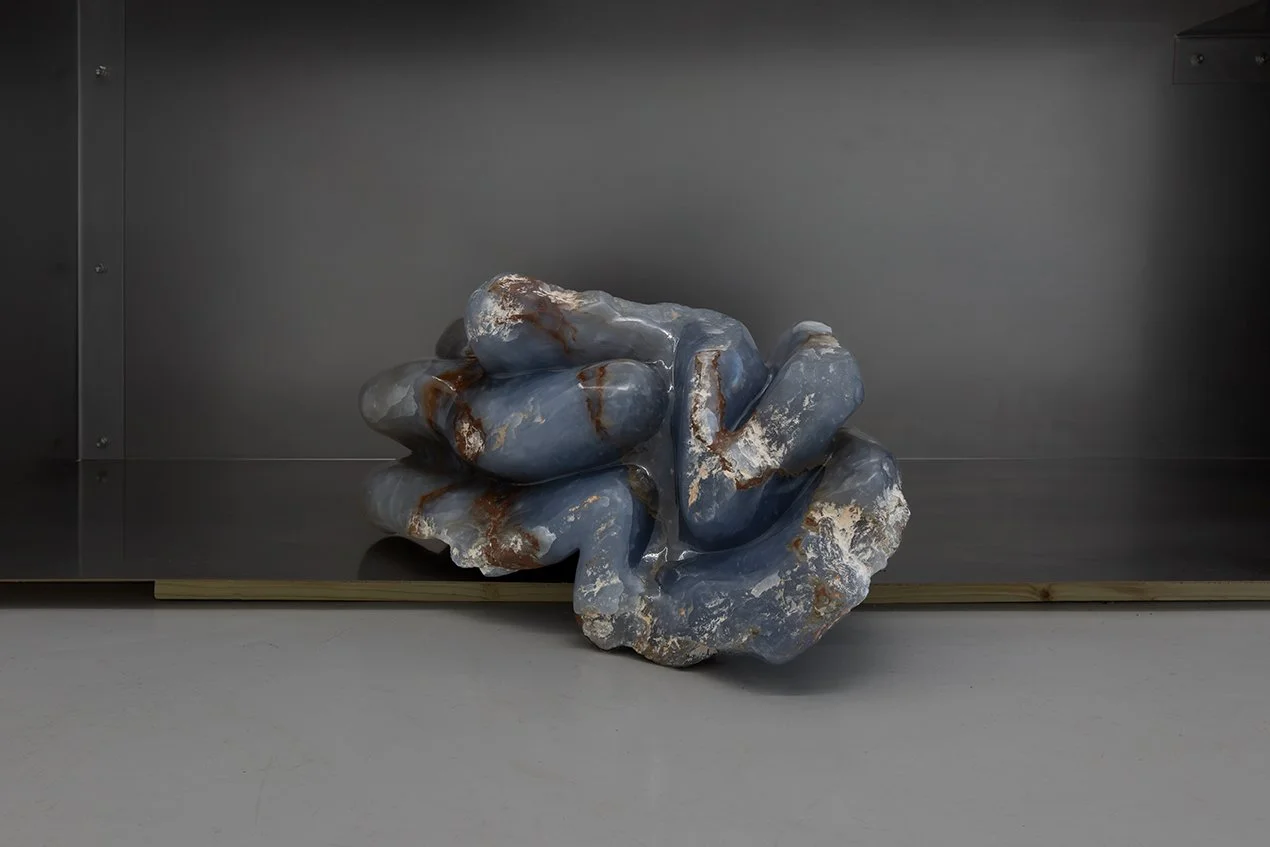
Hand carved Anhydrite from the source
50 x 28 x 25 cm
2026
£8,000
In her research of extracted matter at the periphery of a mine, Morgan turns her attention to Anhydrite and water. The two seem oppositional - Anhydrite, means ‘no water’ - yet there is alchemy present. On contact with one another the stone begins a chemical change - the surface morphing and cracking over time becoming gypsum. For Morgan this vulnerability in material shifted ideas of monument as a fixed intention of sculptural form. Reflecting the instability of the time we're in she plays with slippages between industrial landscapes, personal labour, mourning, and collapsible matter - both material and imagined.
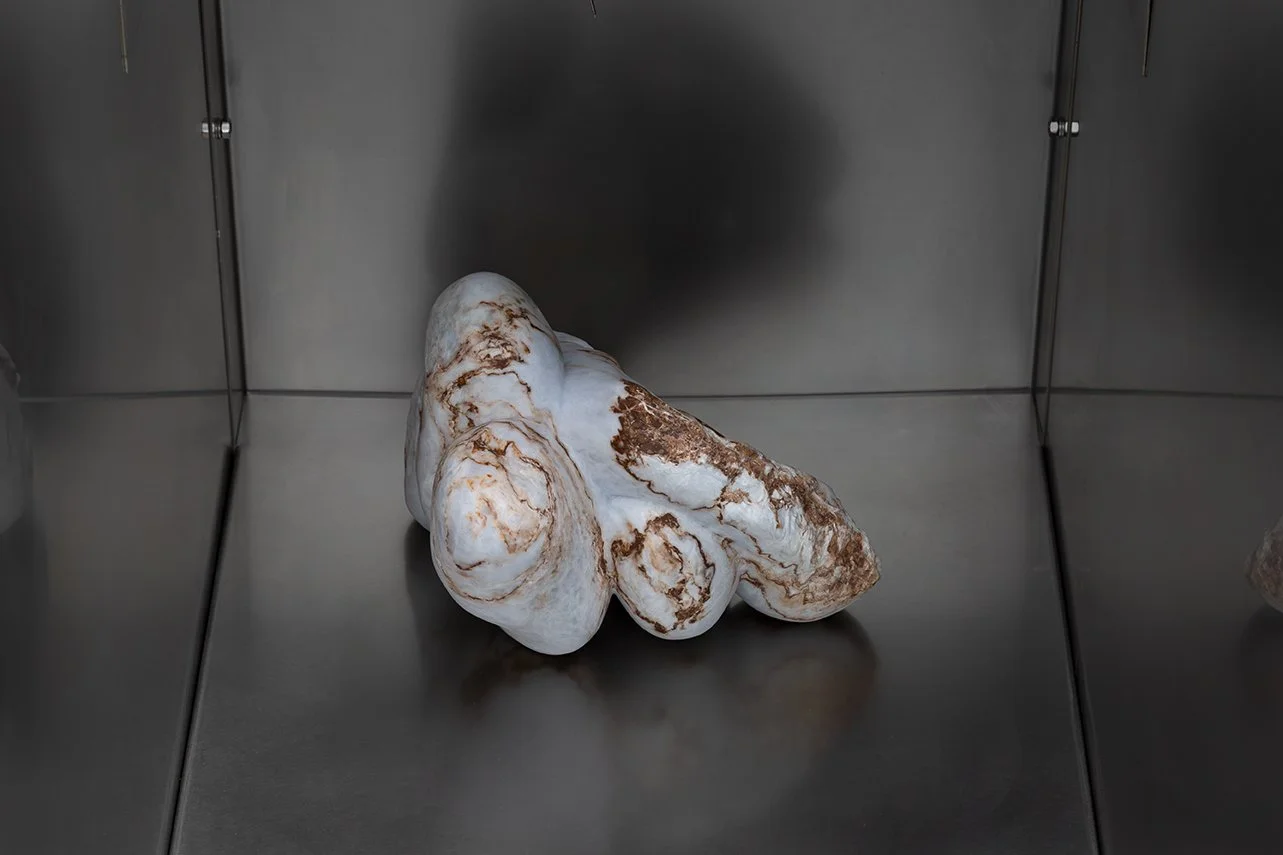
Hand carved 2 year weathered Anhydrite
20 x 33 x 18 cm
2024 - 2026
£3,500
Renseignez-vous ici
In her research of extracted matter at the periphery of a mine, Morgan turns her attention to Anhydrite and water. The two seem oppositional - Anhydrite, means ‘no water’ - yet there is alchemy present. On contact with one another the stone begins a chemical change - the surface morphing and cracking over time becoming gypsum. For Morgan this vulnerability in material shifted ideas of monument as a fixed intention of sculptural form. Reflecting the instability of the time we're in she plays with slippages between industrial landscapes, personal labour, mourning, and collapsible matter - both material and imagined.
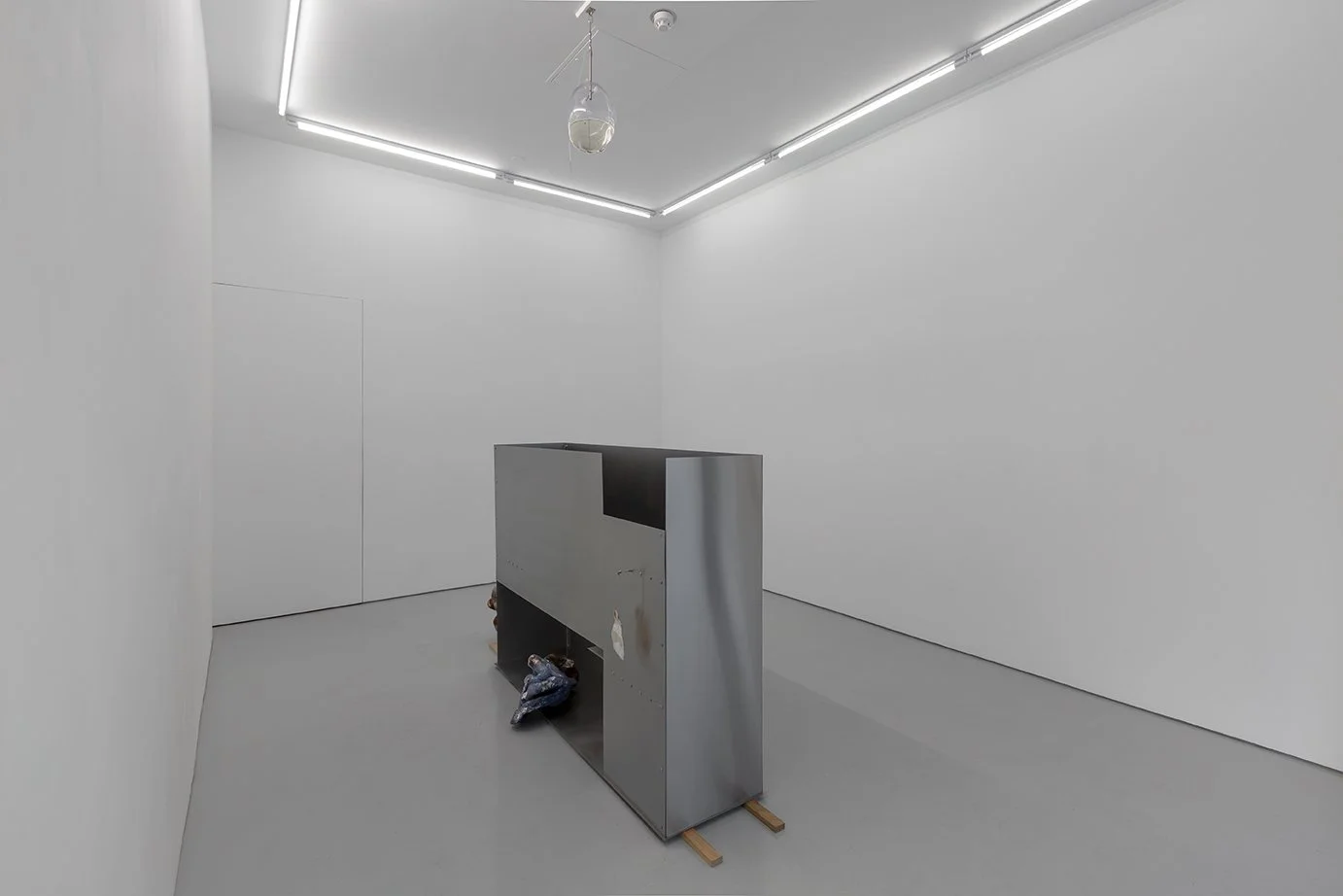
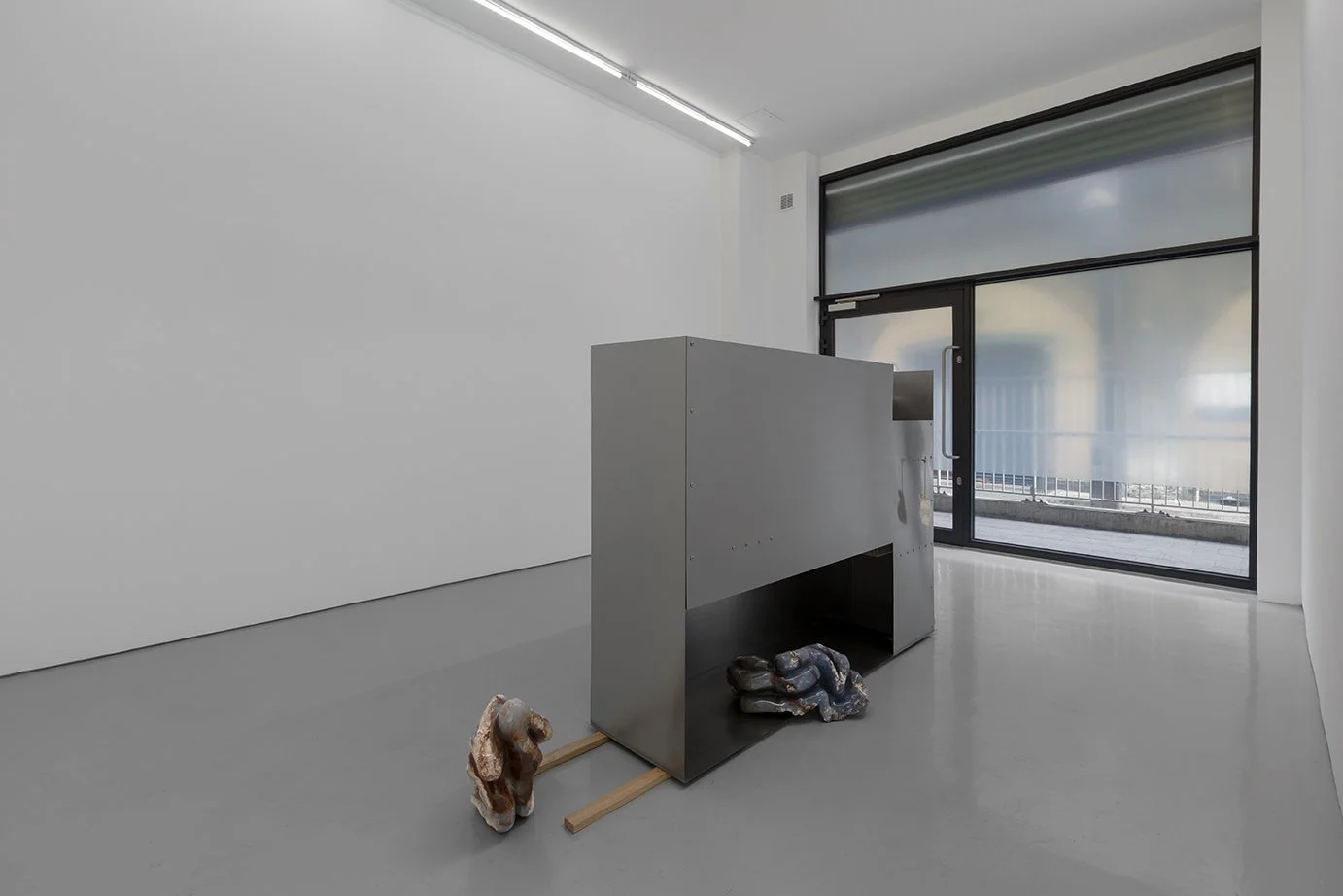
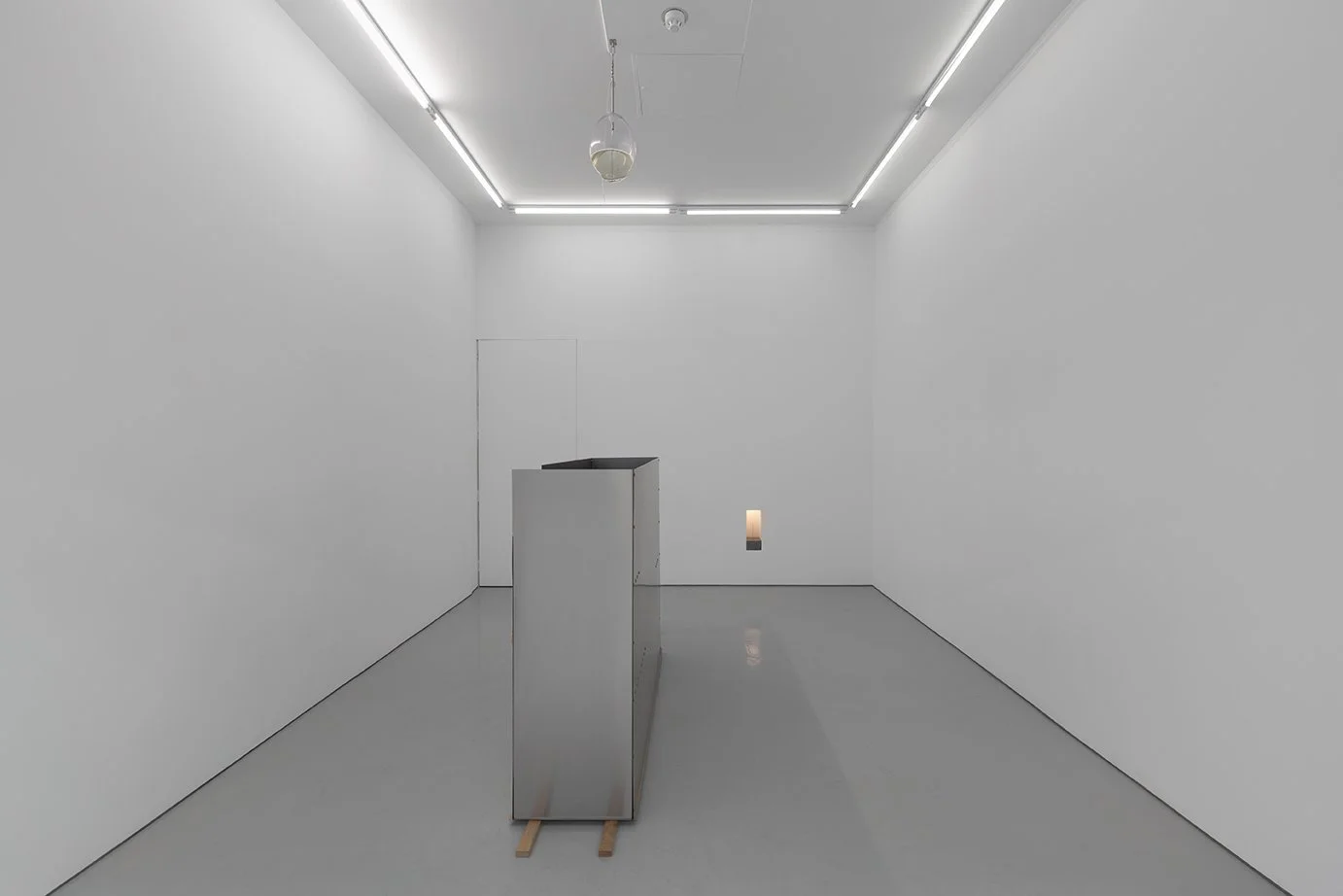
Stainless steel plate, oak, Anhydrite, etched clay, satin spar, mine water, hand blown glass, stainless steel
48 x 132 x 233 cm
2026
Price on request
Conditional sale - must be bought with a carving
Renseignez-vous ici
In her research of extracted matter at the periphery of a mine, Morgan turns her attention to Anhydrite and water. The two seem oppositional - Anhydrite, means ‘no water’ - yet there is alchemy present. On contact with one another the stone begins a chemical change - the surface morphing and cracking over time becoming gypsum. For Morgan this vulnerability in material shifted ideas of monument as a fixed intention of sculptural form. Reflecting the instability of the time we're in she plays with slippages between industrial landscapes, personal labour, mourning, and collapsible matter - both material and imagined.
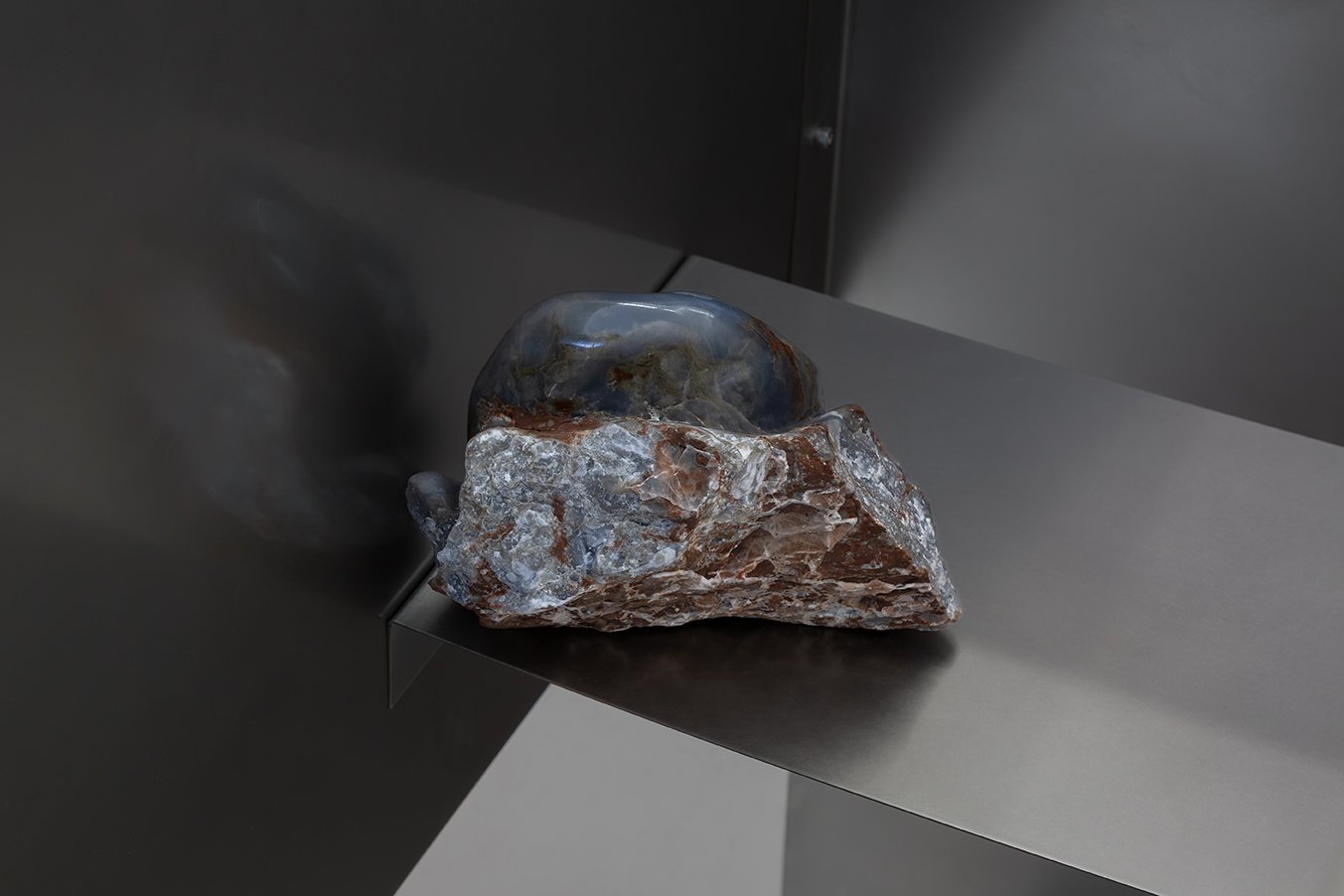
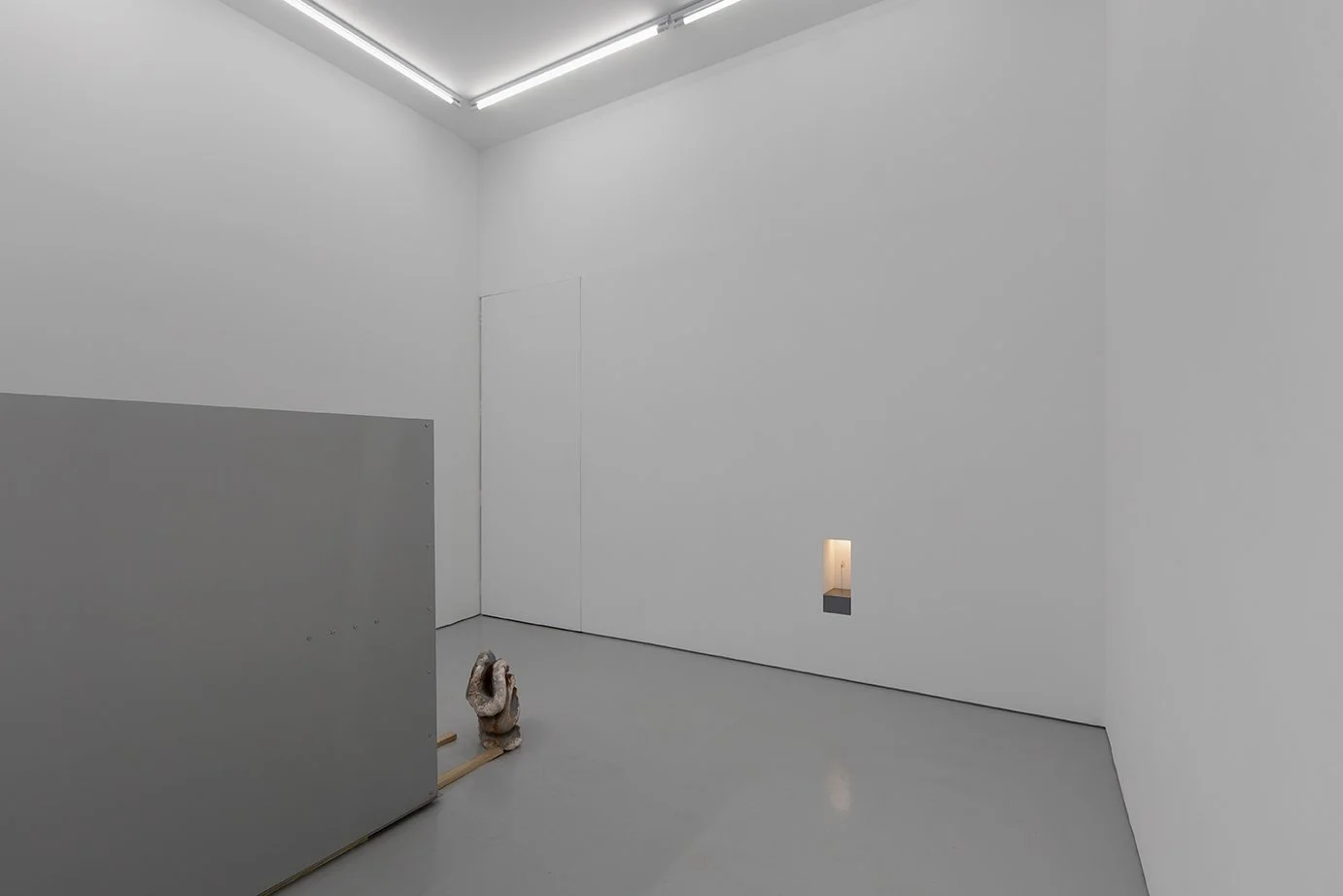
Hand carved Anhydrite
22 x 18 x 15 cm
2026
£3,000
Renseignez-vous ici
In her research of extracted matter at the periphery of a mine, Morgan turns her attention to Anhydrite and water. The two seem oppositional - Anhydrite, means ‘no water’ - yet there is alchemy present. On contact with one another the stone begins a chemical change - the surface morphing and cracking over time becoming gypsum. For Morgan this vulnerability in material shifted ideas of monument as a fixed intention of sculptural form. Reflecting the instability of the time we're in she plays with slippages between industrial landscapes, personal labour, mourning, and collapsible matter - both material and imagined.
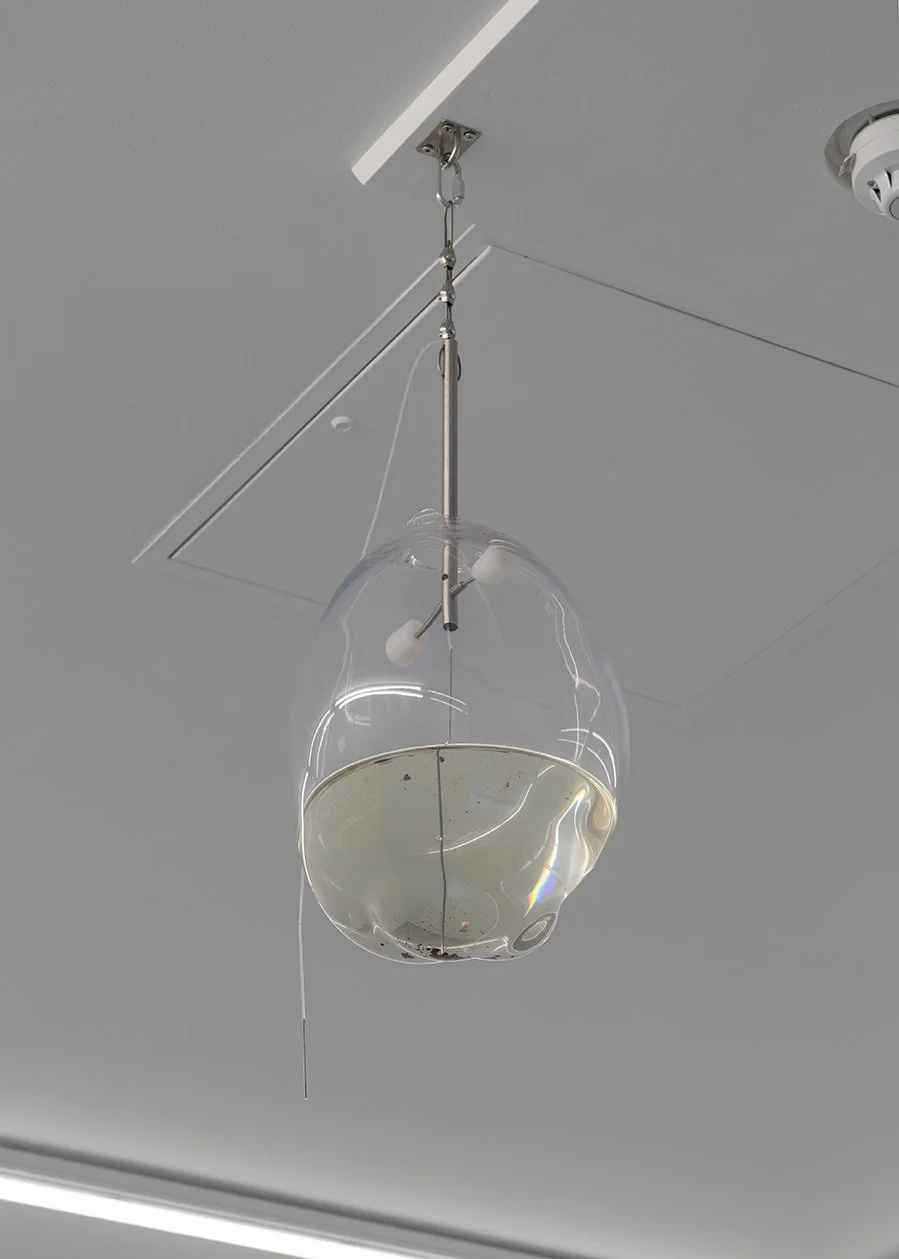
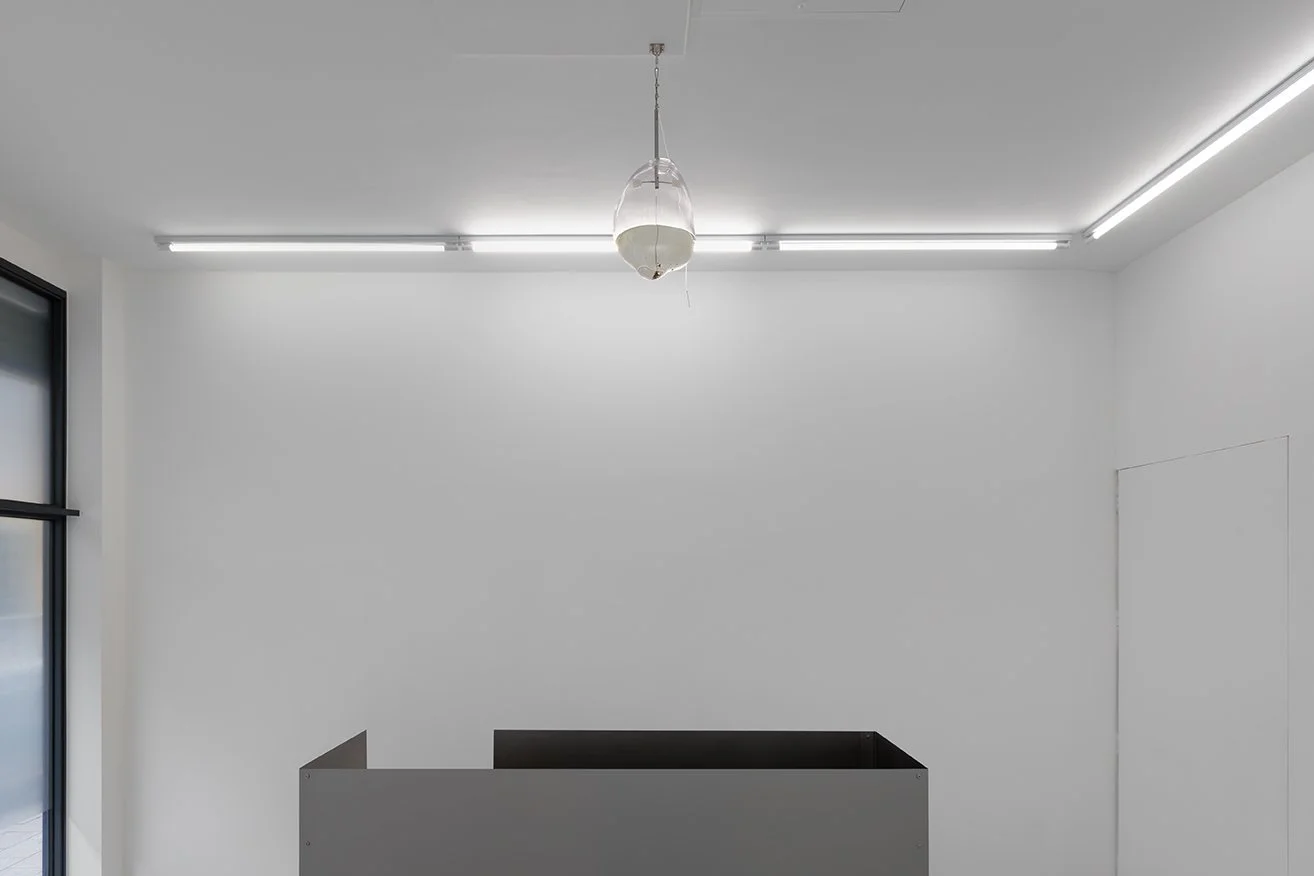
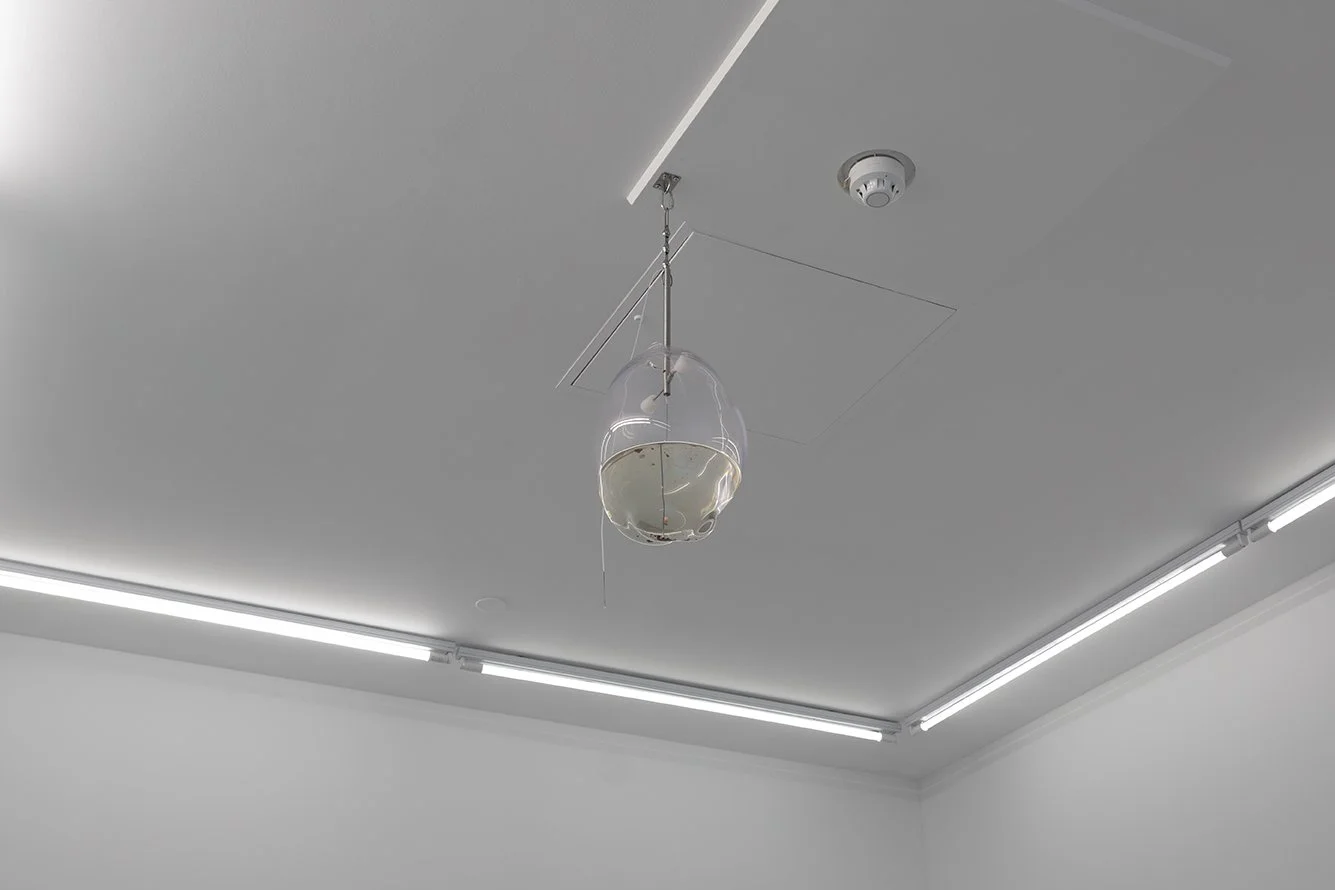
Suspended hand blown glass, stainless steel rod and micro tubing, mine water
Approx 35 x 20 x 20 cm
2026
£2,200
Conditional sale - must be bought with a carving
Renseignez-vous ici
In her research of extracted matter at the periphery of a mine, Morgan turns her attention to Anhydrite and water. The two seem oppositional - Anhydrite, means ‘no water’ - yet there is alchemy present. On contact with one another the stone begins a chemical change - the surface morphing and cracking over time becoming gypsum. For Morgan this vulnerability in material shifted ideas of monument as a fixed intention of sculptural form. Reflecting the instability of the time we're in she plays with slippages between industrial landscapes, personal labour, mourning, and collapsible matter - both material and imagined.
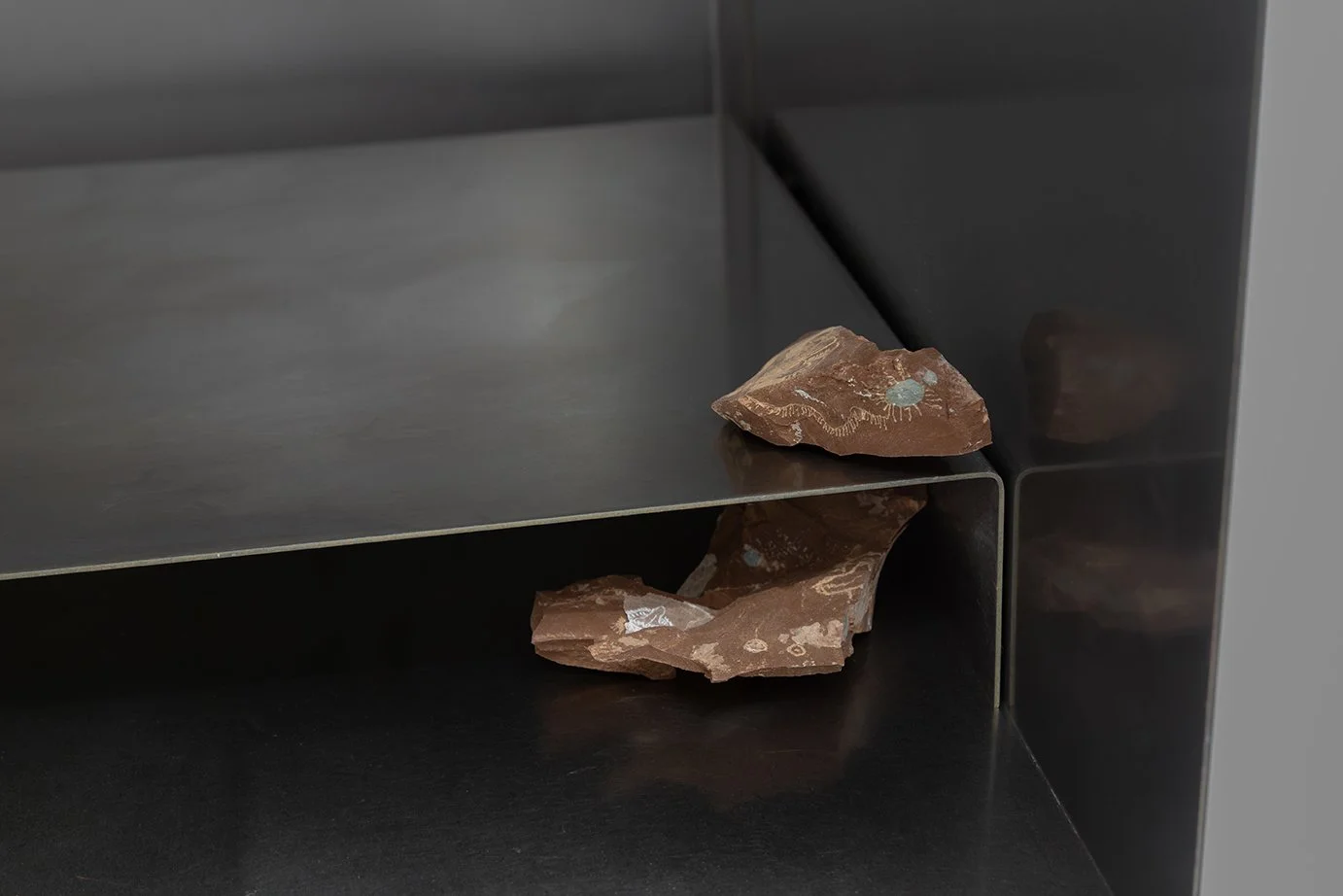
Etched impacted clay from the source
Variable dimensions - a pair of etchings together
2026
£1,000
Renseignez-vous ici
In her research of extracted matter at the periphery of a mine, Morgan turns her attention to Anhydrite and water. The two seem oppositional - Anhydrite, means ‘no water’ - yet there is alchemy present. On contact with one another the stone begins a chemical change - the surface morphing and cracking over time becoming gypsum. For Morgan this vulnerability in material shifted ideas of monument as a fixed intention of sculptural form. Reflecting the instability of the time we're in she plays with slippages between industrial landscapes, personal labour, mourning, and collapsible matter - both material and imagined.
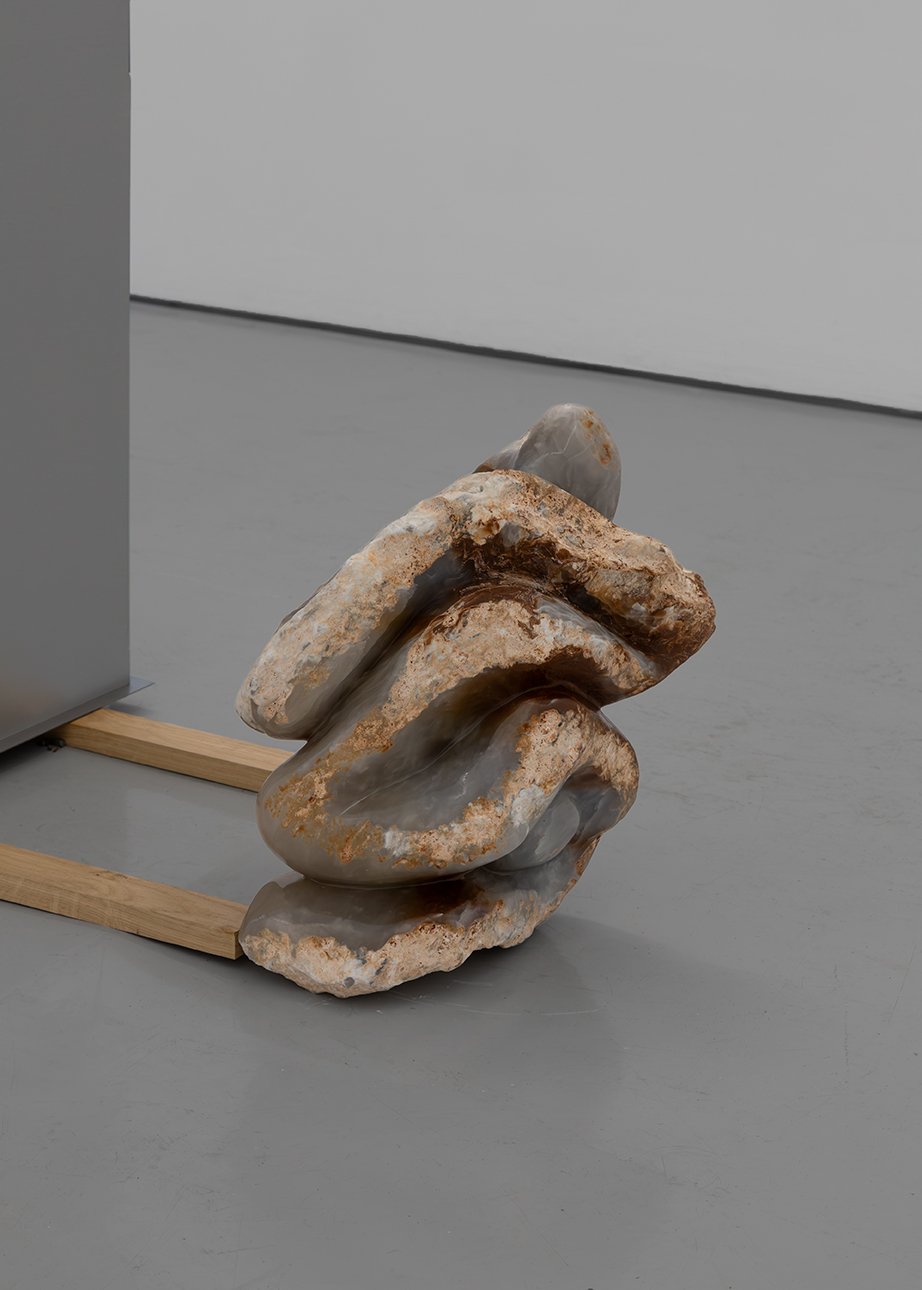
Hand carved Anhydrite / Alabaster mix, from the source
38 x 23 x 28 cm
2026
£5,000
Renseignez-vous ici
In her research of extracted matter at the periphery of a mine, Morgan turns her attention to Anhydrite and water. The two seem oppositional - Anhydrite, means ‘no water’ - yet there is alchemy present. On contact with one another the stone begins a chemical change - the surface morphing and cracking over time becoming gypsum. For Morgan this vulnerability in material shifted ideas of monument as a fixed intention of sculptural form. Reflecting the instability of the time we're in she plays with slippages between industrial landscapes, personal labour, mourning, and collapsible matter - both material and imagined.
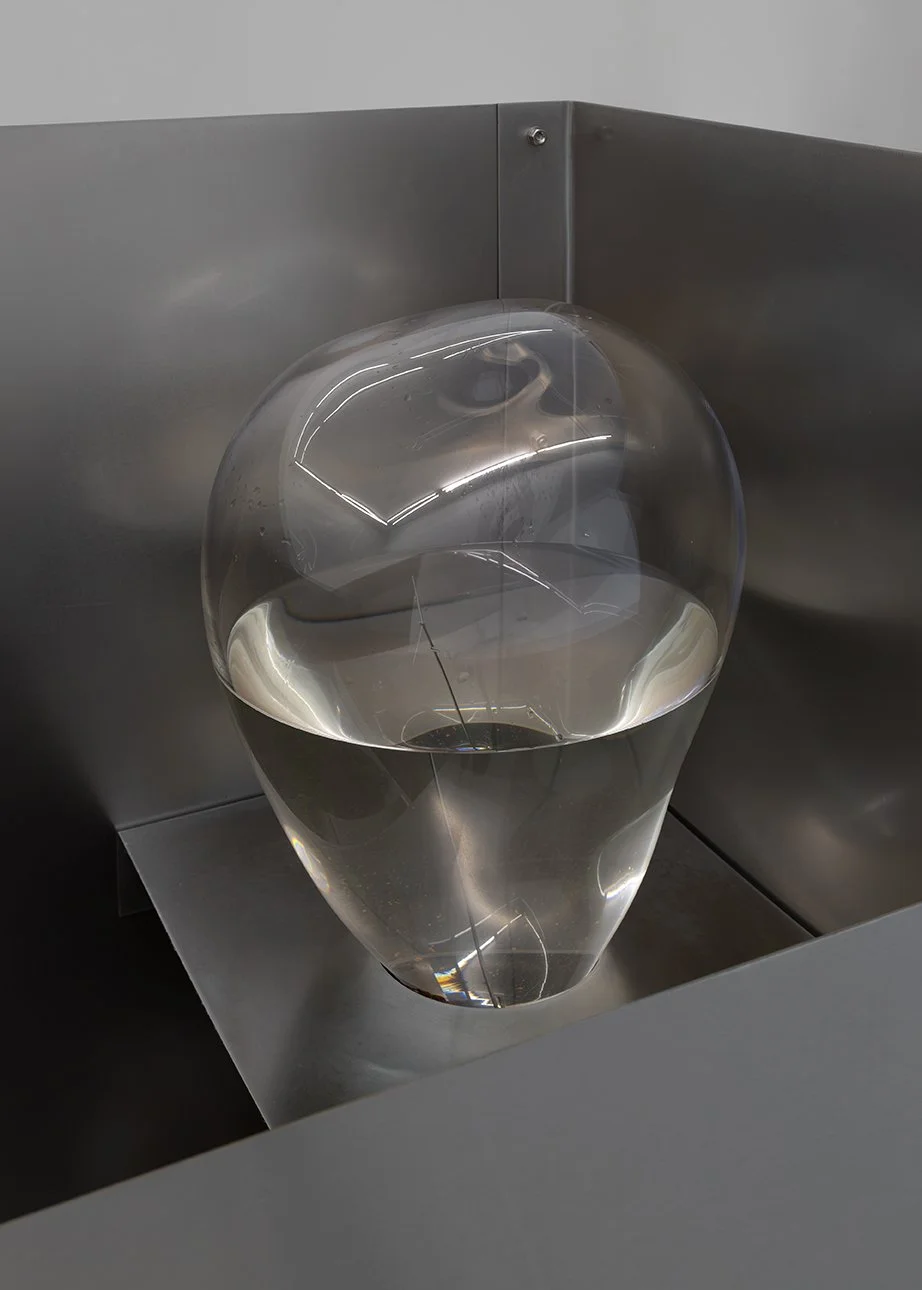
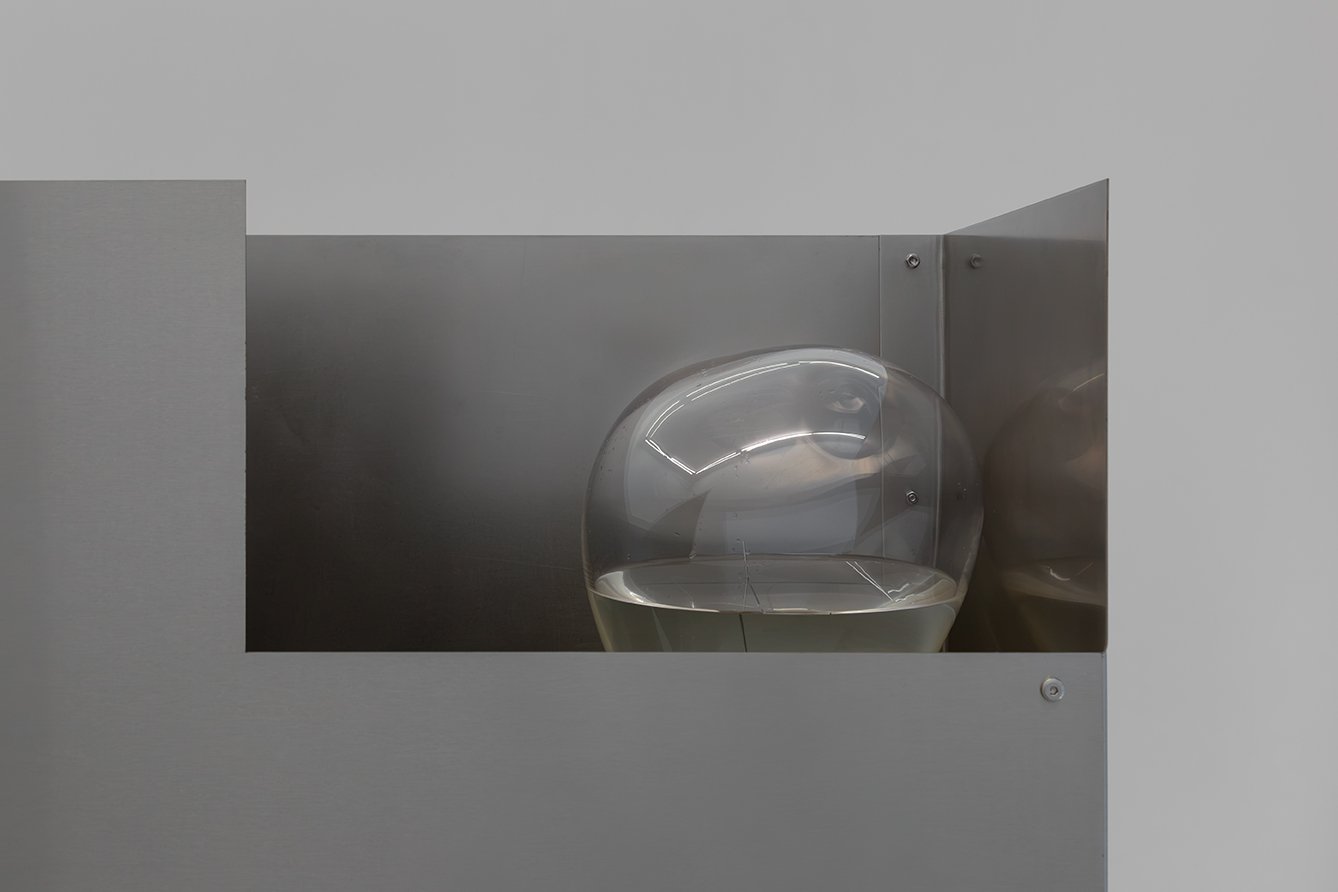
Hand blown glass, stainless steel rods, silicone bung, mine water and sediment
Approx 40 x 24 x 24 cm
2026
£2,200
Conditional sale - must be bought with a carving
Renseignez-vous ici
In her research of extracted matter at the periphery of a mine, Morgan turns her attention to Anhydrite and water. The two seem oppositional - Anhydrite, means ‘no water’ - yet there is alchemy present. On contact with one another the stone begins a chemical change - the surface morphing and cracking over time becoming gypsum. For Morgan this vulnerability in material shifted ideas of monument as a fixed intention of sculptural form. Reflecting the instability of the time we're in she plays with slippages between industrial landscapes, personal labour, mourning, and collapsible matter - both material and imagined.
Texte de l'exposition
Wet Mausoleum
Imagine you were a monuments guy, a needle-carved-from-a-single-piece-of-granite guy, an emperor’s-marble-forelock guy, a mausoleum guy. The kind of person who thought stone meant forever. Imagine you once spent a week in Rome, and when you looked at the columns and the busts you thought that these were made by the cleverest artists of all, because they had chosen a material that lasted. The glass blowers, the wood carvers, where was their work now? Forgotten, that’s where. Cracked into billions of tiny shards, washed away, burnt to a cinder, rotted back into the earth. If you analysed your feelings towards stone (something you had admittedly never done), they would speak to a deep-rooted fear of your own insignificance for which the promise of legacy was a balm. You certainly did not want to see yourself as a droplet of spray in a great ocean, a tiny form thrown upwards from the water, momentarily assuming the appearance of an individual entity before returning to the wave from which you came. This was not for you. Instead you preferred to conceive of yourself as solid, singular, impervious, unmoved and unchanged by the unending flux of the world.
With all this in mind, imagine that one day you were sitting on a busy train beside an artist and her friend. It soon transpired that the artist worked with stone, which naturally pleased you, as you often lamented how few people applied themselves to the mastery of traditional art forms. The artist had recently visited a mine to collect alabaster, a mine where both gypsum and alabaster were present, both deriving from ancient seabeds, sharing an identical chemical make-up and emerging in adjacent seams. You listened as she described the appeal of alabaster, the way it changes according to touch and atmosphere, how it was used by sculptors in the Middle Ages for its uncanny affinity with human flesh, how its veins and capacity to bruise is a link between the earth, the human and the divine. Her carving technique was intuitive, she said, she made no sketches and instead followed the stone, discovering where it wanted to be carved, what it resisted and permitted.
Imagine that on the balance of things you were enjoying this conversation (although you really thought an artist should impose their vision on a material rather than be dictated to by it). But it all took a turn for the worse when the artist began speaking about wetness: oozing orifices, cum and breast milk, sweaty limbs melding together on dance floors, moisture as the thing that linked all life and matter, coursing through everything from rocks and mines to clouds and our own wet passageways. Imagine at this point you wished you had chosen a different seat, but the train was full and you were stuck. Soon the artist turned her attention to another type of stone she had found while she was down the mine: anhydrite. This stone, she said, had an extraordinary ability to shape shift. Once it came in contact with water it transformed into gypsum, losing its hard, crystalline qualities and turning white and chalky. Wetness was the key, and for an exhibition she was making she had collected both water and anhydrite from the same mine to bring this transformation to life.
Imagine, before you left the train, that you heard the artist mention the location of this exhibition. While at the time you had no intention at all of going, a month later you found yourself walking in to the gallery. Before you was a metal structure. On top and underneath this structure were pieces of anhydrite carved into rolling curves like some sort of alien, hyper-mobile limbs, the blue-grey hue of the stone covered in a web of veins the colour of old blood. Water seeped on to these carvings, and as you peered at them you noticed that their surfaces had begun to change, their smoothness turning powdery. You wandered around the room feeling unnerved, until you found yourself staring at a wafer thin piece of stone, stone so thin you could snap it between your fingers, stone that would not stand the test of time but would instead one day be crushed into nothingness, with a carving on its surface that seemed to taunt you, appearing as it did like some sort of peculiar amoeba or water sprite.
You left in a hurry, and upon arriving home took comfort in the solid stone from which your own house was built. But that night, ensconced in your stone house, you had a vision. A large torrent of water poured down from the sky, and when it hit your home the walls dissolved into powder leaving behind a great cavity in the ground. As the water hit you also transformed. Your orifices began leaking minerals, your nipples became waterfalls, your eyeballs slipped from their sockets, until the definite edges that set you apart from the rest of the world were washed away and you were nothing more than a fleshy wet tube, a hungry and horny fleshy wet tube ingesting and expelling and mingling with the world around you. You saw this monstrous dripping entity that was you crawling into the hole in the ground where your house once stood, slurping up the chalky residue as it made its way down, rubbing its veins over the veins of rocks, bruising and being bruised in return, until in the wet depths of the earth it collapsed in ecstasy, no longer distinguishable from the ancient sea bed, just another pile of moist feral biomatter ready to transform again.
Text by Rosanna MacLaughlin
À propos d'Hannah Morgan
b. 1985, London UK
2004 - 2007 University of Sussex
2010 - 2012 Royal College of Art
2018 - 2022 The Slade School of Fine Art
A London based artist graduating from the Slade School of Fine Art in 2022. Hannah Morgan received the Adrian Carruthers Award 22/23 in partnership with ACME and Prankerd Jones Memorial Prize for excellence in Fine Art at the Slade.
Hannah Morgan’s work is sculptural installation. Combining film, audio, sculpture, and text to create material components that consider decay and emergence. Thresholds, unearthing, preservation, trace, and speculation underpin their practice. Morgan creates narratives through sculptural assemblage and text/audio that consider loss and transformative states of being that address the precarity of self, object and the natural world.
Recent solo and two-person exhibitions include Fault Lines with Gabriel Mills, Public Gallery, London (2026); SYPEN, Xxijra Hii, London (2026); Frieze Focus, presented by Xxijra Hii, Frieze London (2024); and Animula: Mud Time Fissures, Xxijra Hii, London (2023). Recent group exhibitions include Cells & Love, Gallery 1 at 1 Poultry Lane, London (2025); FRINGE, LABs Contemporary, Bologna (2025); and Nectere, Kupfer Gallery in association with ACME, London (2024). Awards and residencies include Cove Park, Scotland (2023); the Adrian Caruthers Award / ACME Early Career Award (2022); Middle Midhouse Orkney Residency (2020); and the Prankerd Jones Memorial Prize at the Slade School of Fine Art (2019).