Mares Womb. 001
PLA , Epoxy Resin, Oil paint, Steel
30 x 27 x 8cm (Mare)
9 x 12 x 4.5 cm (Metal)
2025
£1,200 GBP
“I was several. I bring you a piece of the horizon. ”
Paul B. Preciado, Feminism is not humanism, 2014
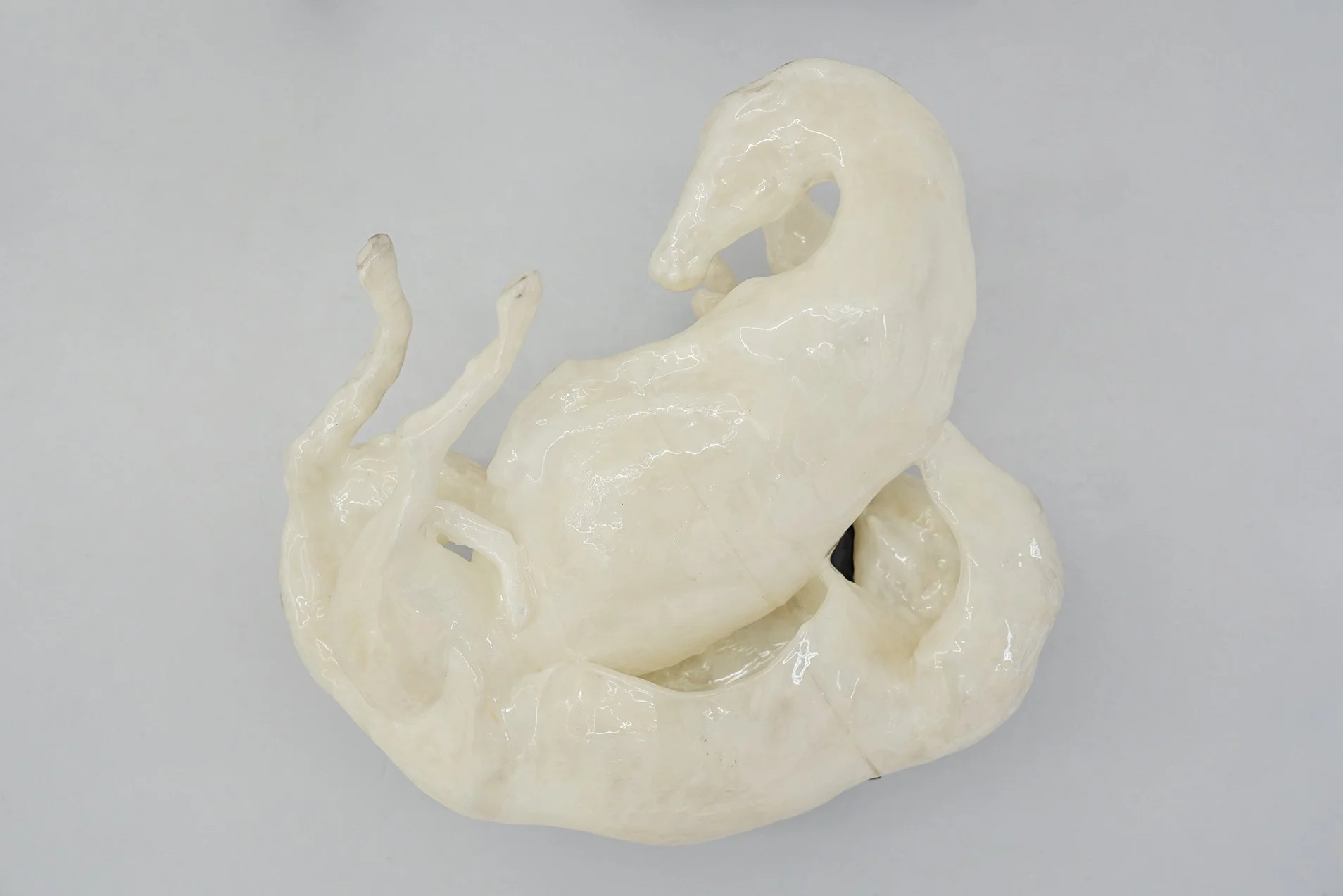
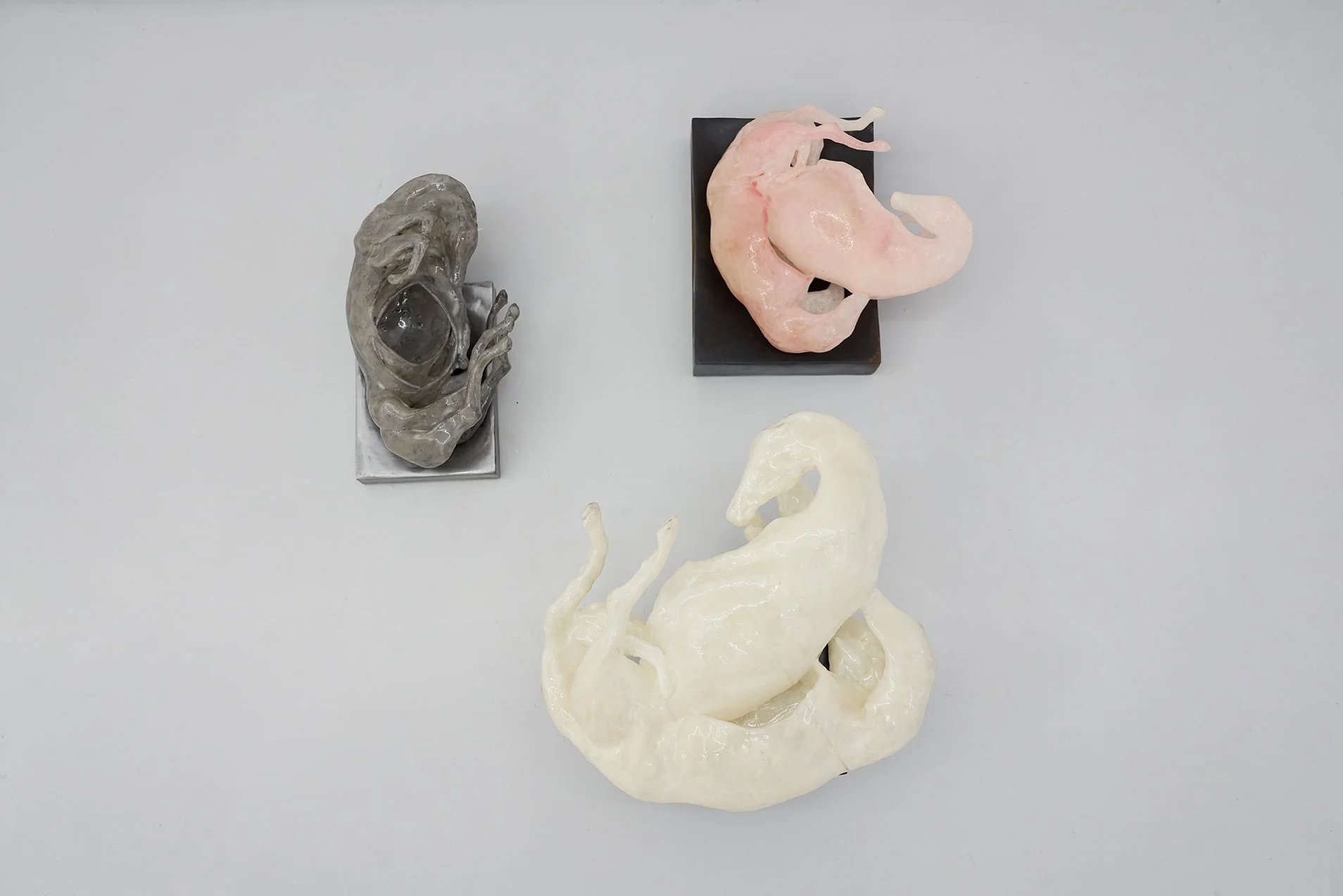
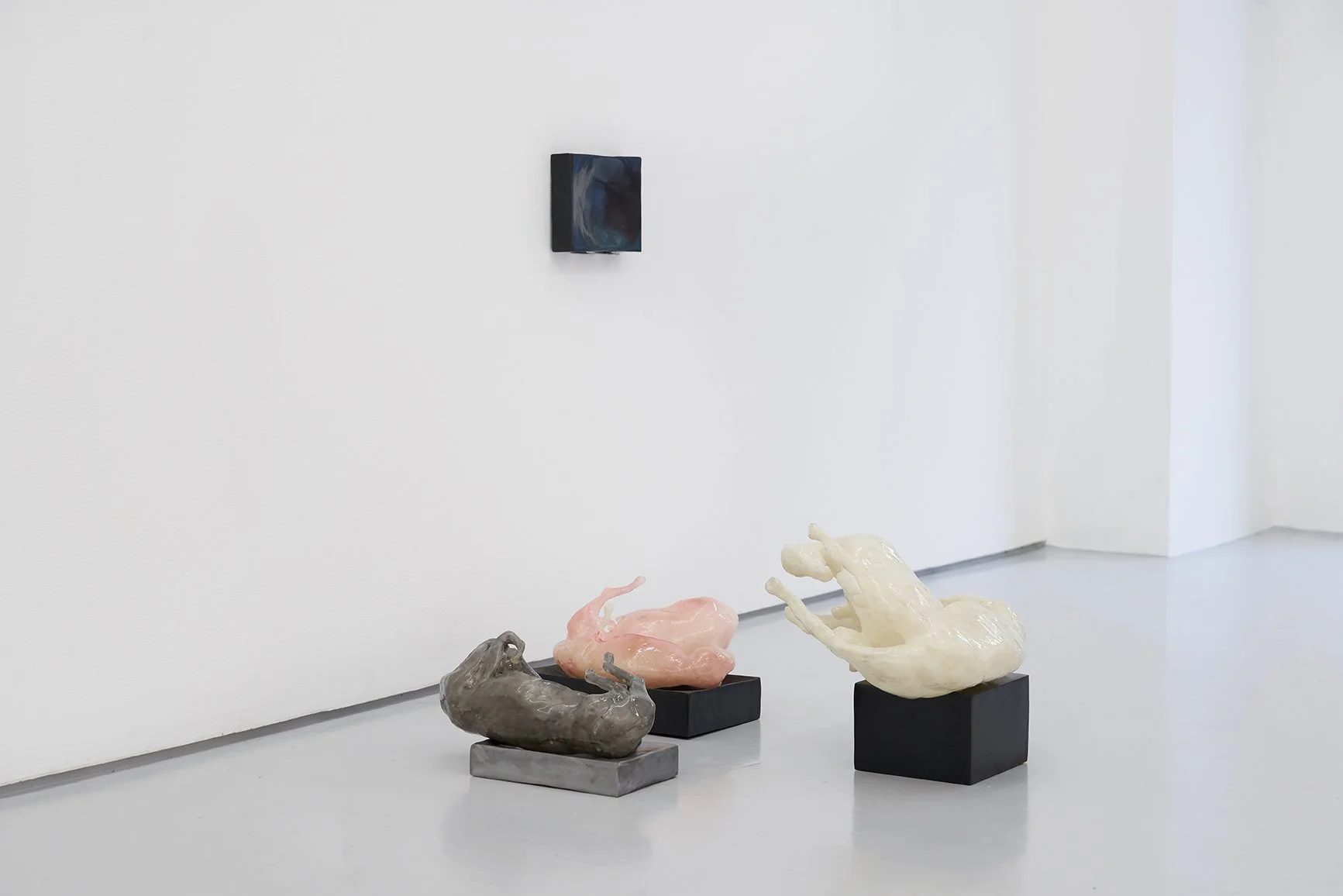
The series Mares Womb explores the self-reproductive multiplicity of the body. The sculptures which are borne out of a ceramic piece of a mare, its tactility infers feelings of desire, becoming repositioned and rebirthed through its digital interference. The Mares Womb references Paul B. Preciado’s essay Feminism is not humanism, concerning animalism as an expansion of feminism. The work questions how we act on and experience love, the place where identity is destroyed or produced, how we imagine, and the ways we learn to desire.
This series of work stems from a preliminary clay work, which then is scanned and reproduced digitally. Multiplying itself allows the plurality of the mare’s body to reveal meaning internally, encountering its own body. The mare lying with her womb emptied, distorted into a cavernous abyss, the lack of intestines removes the mare from a physical realm. Then into another where her body through a digital intervention oscillates between the individual and the replica, until they become one.
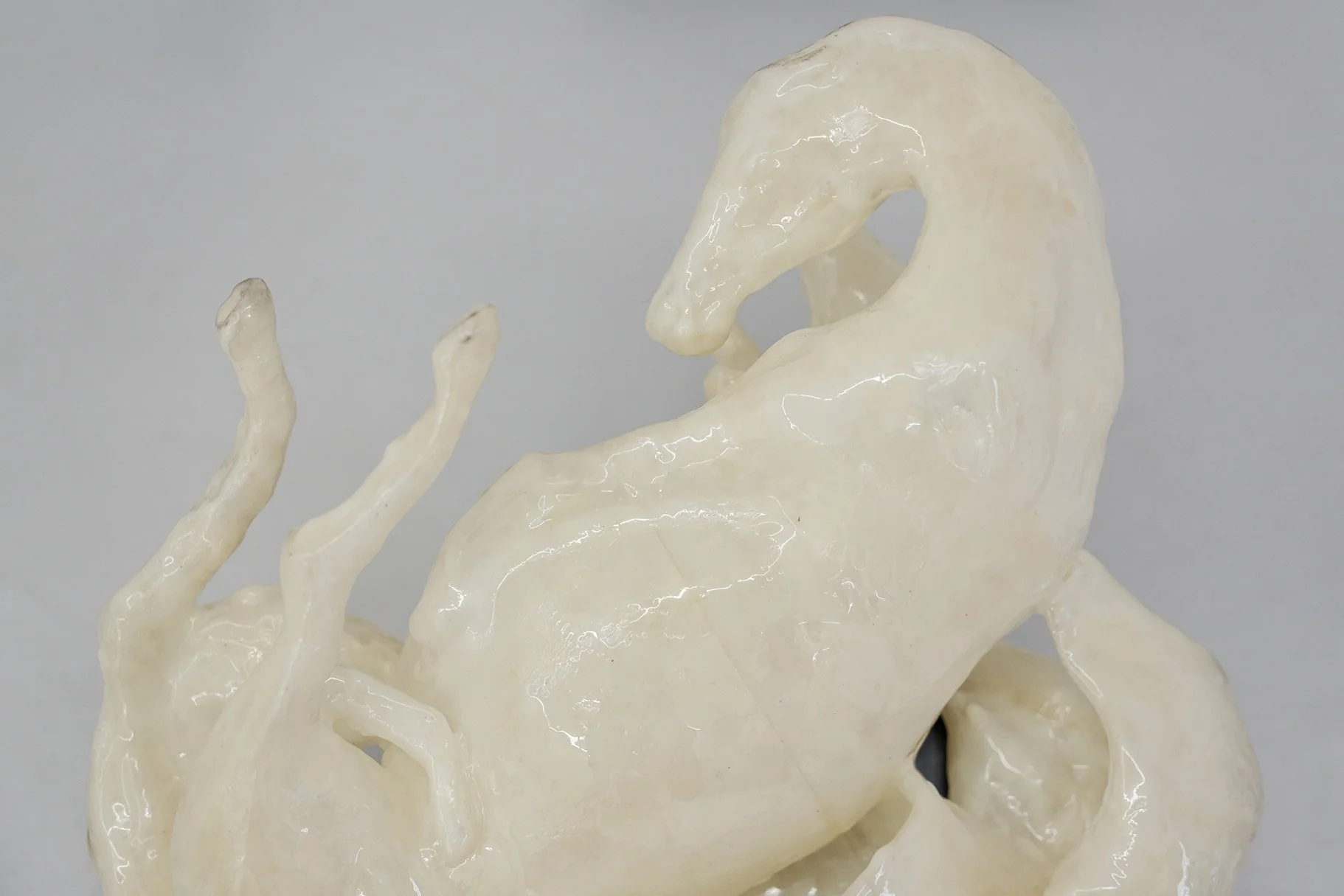
The ecstasies of a sapphic expression. The figures are intertwined, one leg across the other’s stomach, petrified in a portrait of affect. Their skin in physical space simulates crystalline bones, as if their organs had disintegrated transformed into action that approximates yearning. Seemingly delicate, the figures rest above and in connection to a piece of metal, that their weight have “dented” into the steel.
Mares Womb. 001
PLA , Epoxy Resin, Oil paint, Steel
30 x 27 x 8cm (Mare)
9 x 12 x 4.5 cm (Metal)
2025
£1,200 GBP
“I was several. I bring you a piece of the horizon. ”
Paul B. Preciado, Feminism is not humanism, 2014
The series Mares Womb explores the self-reproductive multiplicity of the body. The sculptures which are borne out of a ceramic piece of a mare, its tactility infers feelings of desire, becoming repositioned and rebirthed through its digital interference. The Mares Womb references Paul B. Preciado’s essay Feminism is not humanism, concerning animalism as an expansion of feminism. The work questions how we act on and experience love, the place where identity is destroyed or produced, how we imagine, and the ways we learn to desire.
This series of work stems from a preliminary clay work, which then is scanned and reproduced digitally. Multiplying itself allows the plurality of the mare’s body to reveal meaning internally, encountering its own body. The mare lying with her womb emptied, distorted into a cavernous abyss, the lack of intestines removes the mare from a physical realm. Then into another where her body through a digital intervention oscillates between the individual and the replica, until they become one.
The ecstasies of a sapphic expression. The figures are intertwined, one leg across the other’s stomach, petrified in a portrait of affect. Their skin in physical space simulates crystalline bones, as if their organs had disintegrated transformed into action that approximates yearning. Seemingly delicate, the figures rest above and in connection to a piece of metal, that their weight have “dented” into the steel.