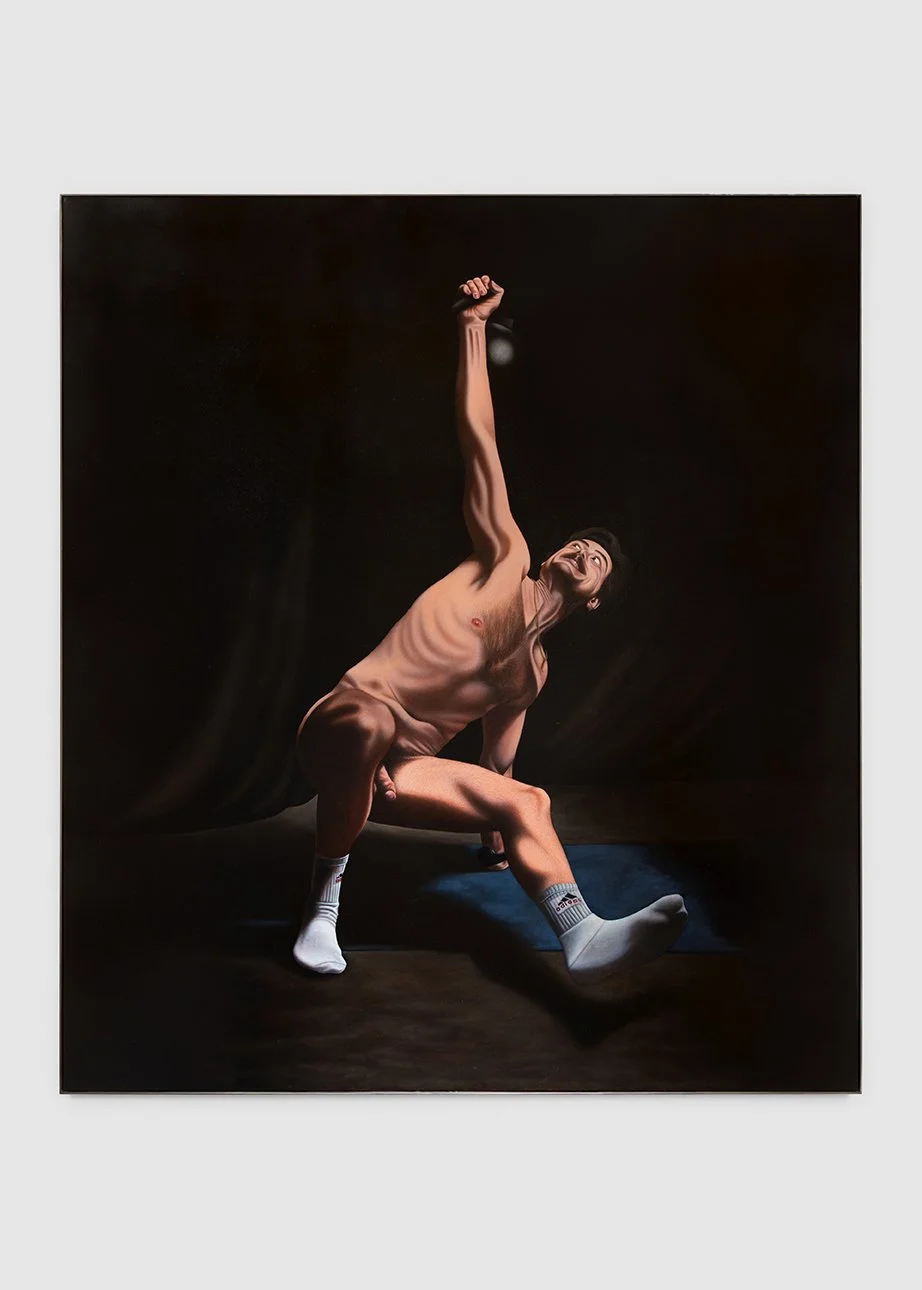
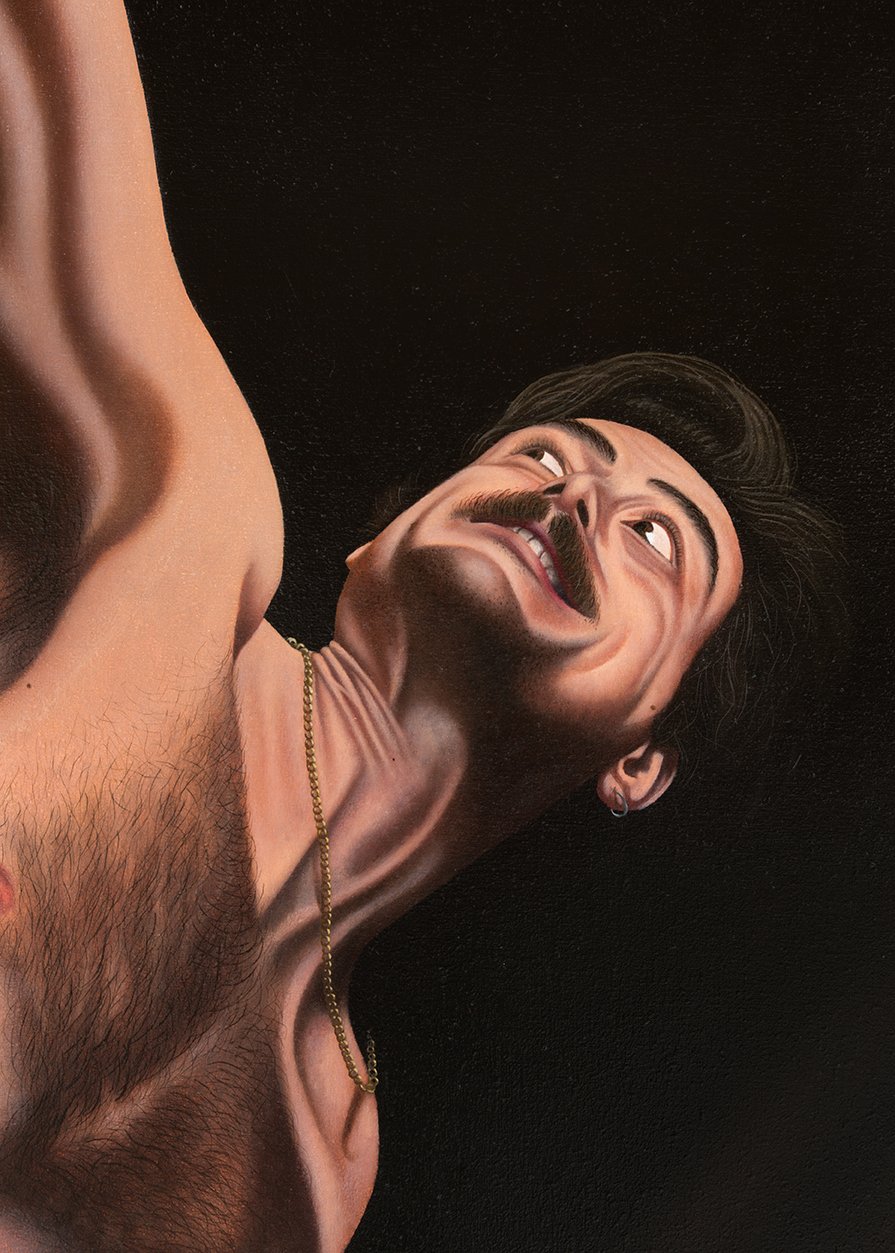
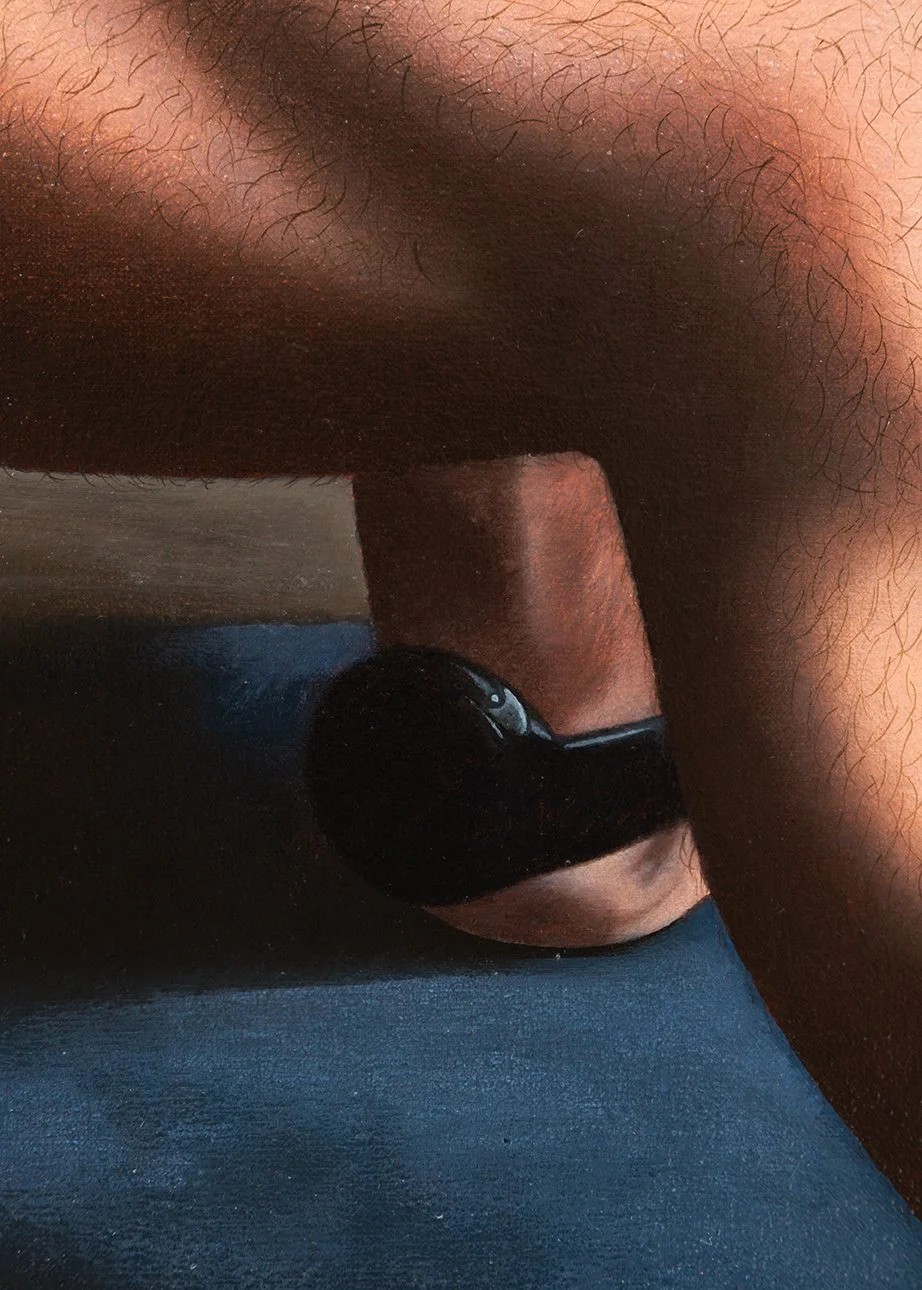
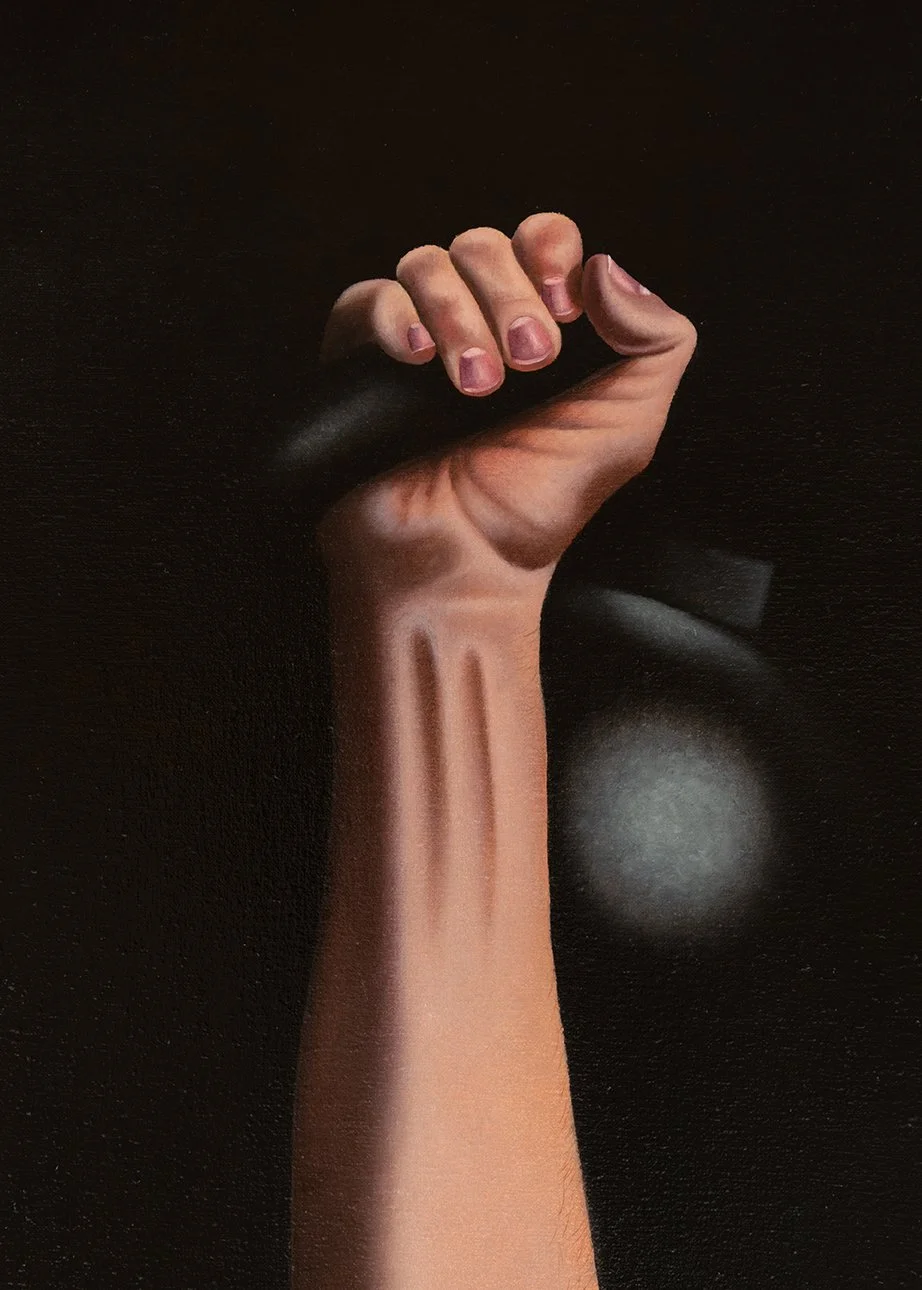
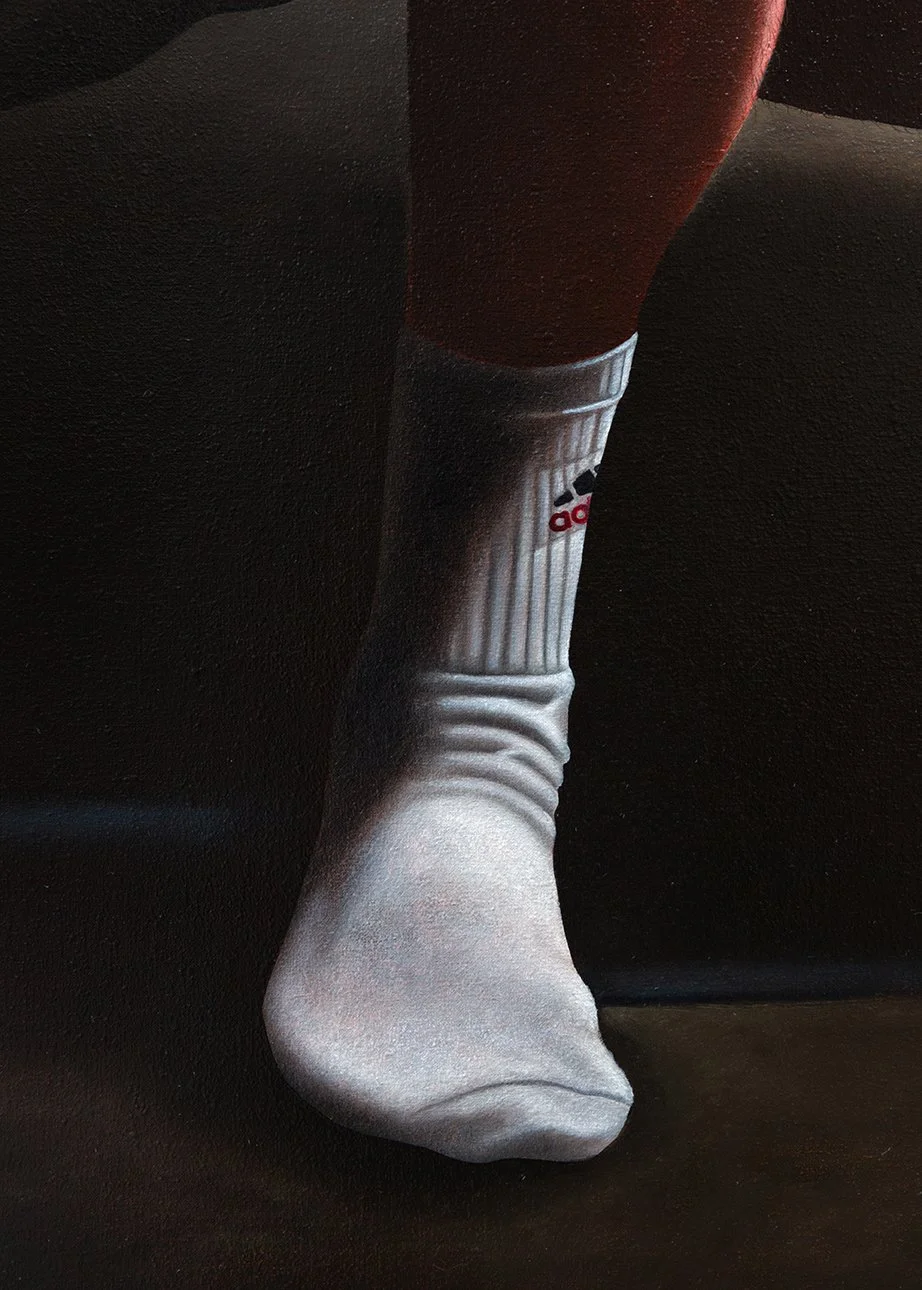
Oil on Linen, Aluminium frame
180 x 160 cm / 70.8" x 63"
2025
£15,000 GBP ex taxes | €17,500 ex taxes
Enquire here
The Church of Self | Frieze Focus Presentation 2025
Stand F10 | Xxijra Hii Gallery
In The Church of Self, Glen Pudvine delves into the crisis of meaning in an increasingly secular, digitally saturated world. Through painting, performance, video and mirrored architecture, he examines how modern rituals of self-optimisation - wellness, fitness, personal branding - have replaced traditional communal belief systems, elevating individuals to prophetic status under the structures of neoliberalism.
However, Pudvine resists a simple critique. Rather than rejecting individualisation outright, The Church of Self explores how breaking things down to the personal level (the core tactic of neoliberal atomisation) can paradoxically be used to challenge the ideology itself. By foregrounding vulnerability, endurance, and imperfection, Pudvine offers a vision of individual practice as a site of collectivity and relational healing; gesturing viewers to question privatised ideals of competition, self-surveillance, and self-ownership.
Oil on Linen, Aluminium frame
180 x 160 cm / 70.8" x 63"
2025
£15,000 GBP ex taxes | €17,500 ex taxes
Enquire here
The Church of Self | Frieze Focus Presentation 2025
Stand F10 | Xxijra Hii Gallery
In The Church of Self, Glen Pudvine delves into the crisis of meaning in an increasingly secular, digitally saturated world. Through painting, performance, video and mirrored architecture, he examines how modern rituals of self-optimisation - wellness, fitness, personal branding - have replaced traditional communal belief systems, elevating individuals to prophetic status under the structures of neoliberalism.
However, Pudvine resists a simple critique. Rather than rejecting individualisation outright, The Church of Self explores how breaking things down to the personal level (the core tactic of neoliberal atomisation) can paradoxically be used to challenge the ideology itself. By foregrounding vulnerability, endurance, and imperfection, Pudvine offers a vision of individual practice as a site of collectivity and relational healing; gesturing viewers to question privatised ideals of competition, self-surveillance, and self-ownership.