

Miracle
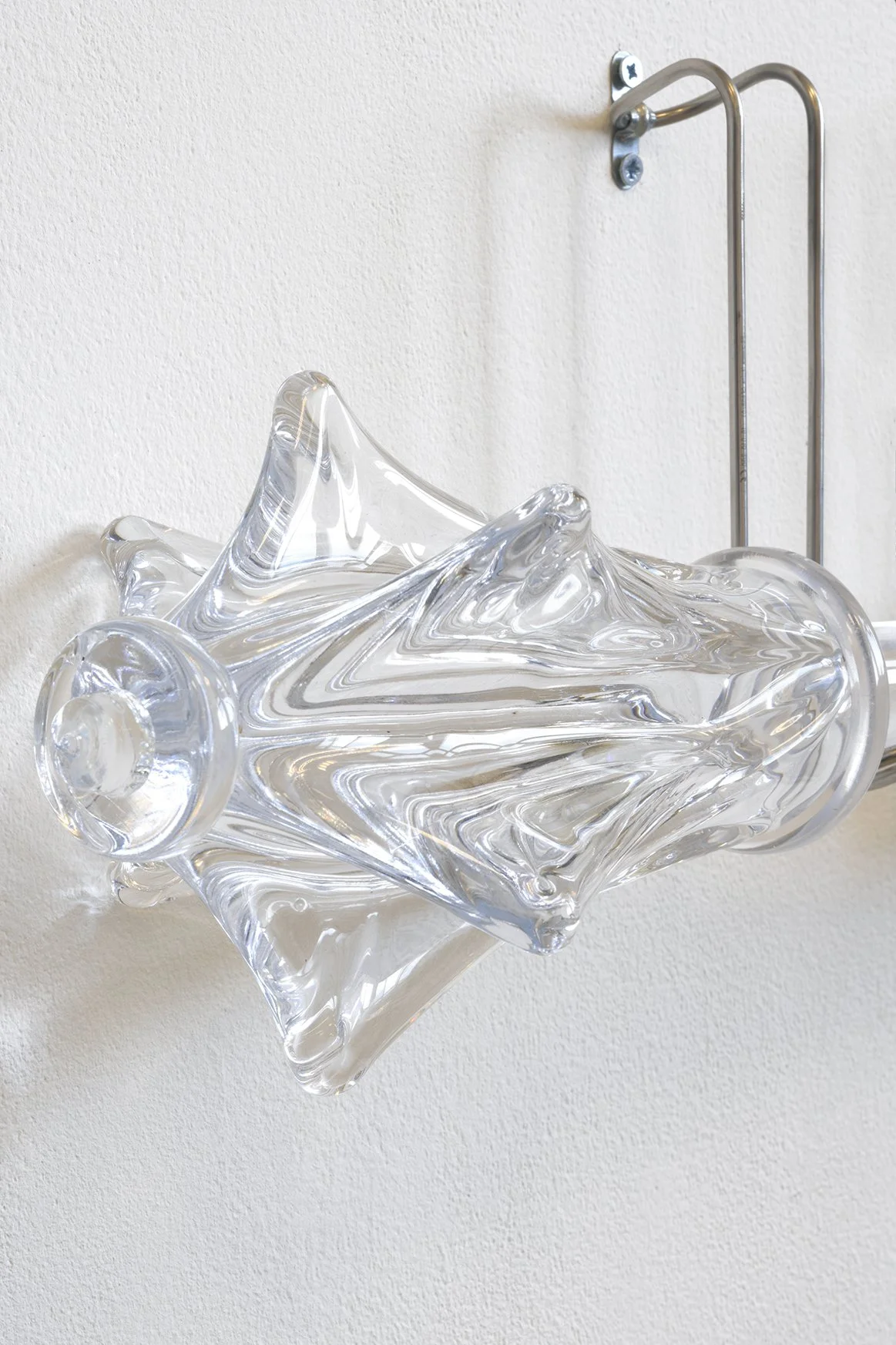
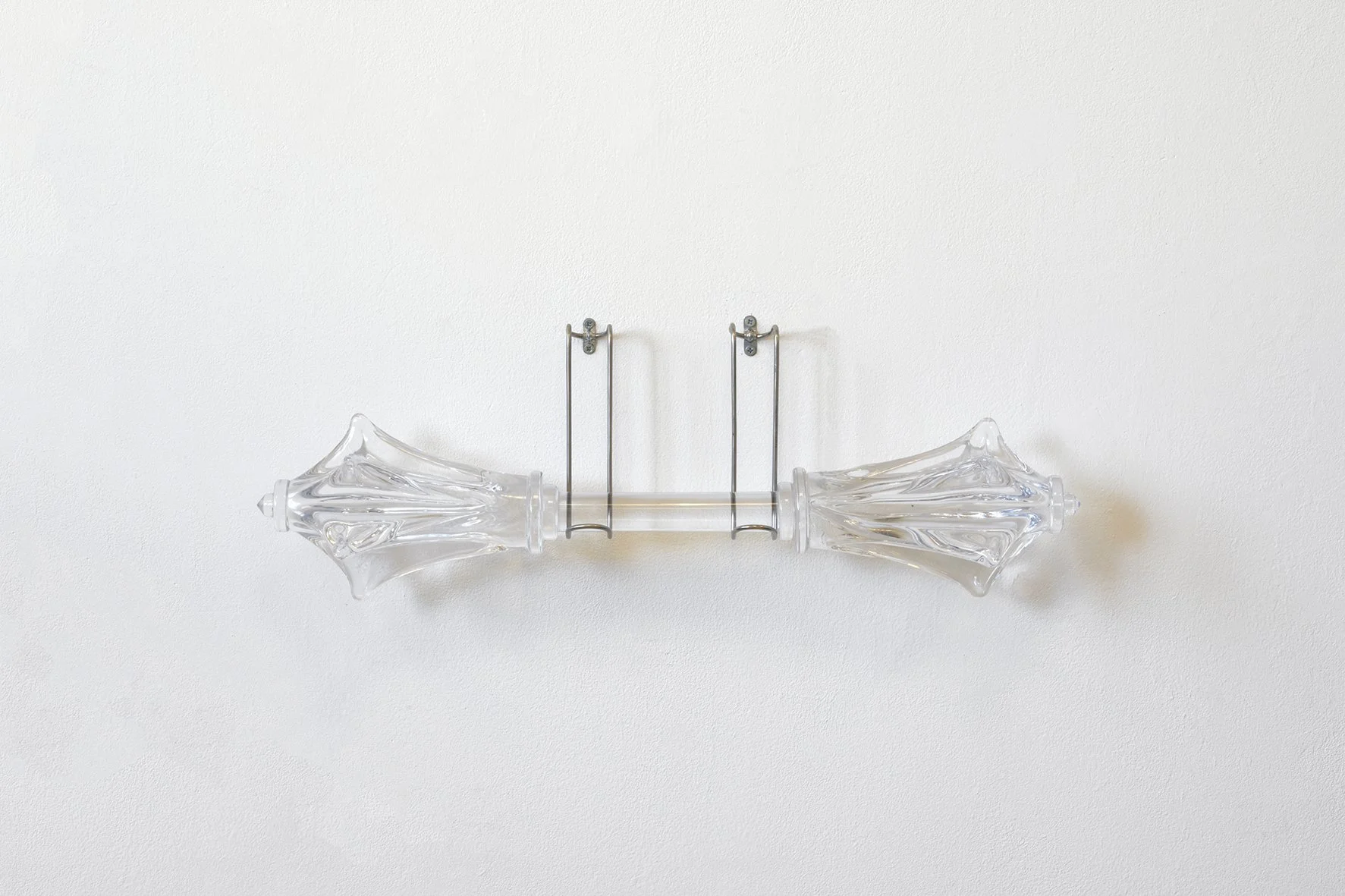
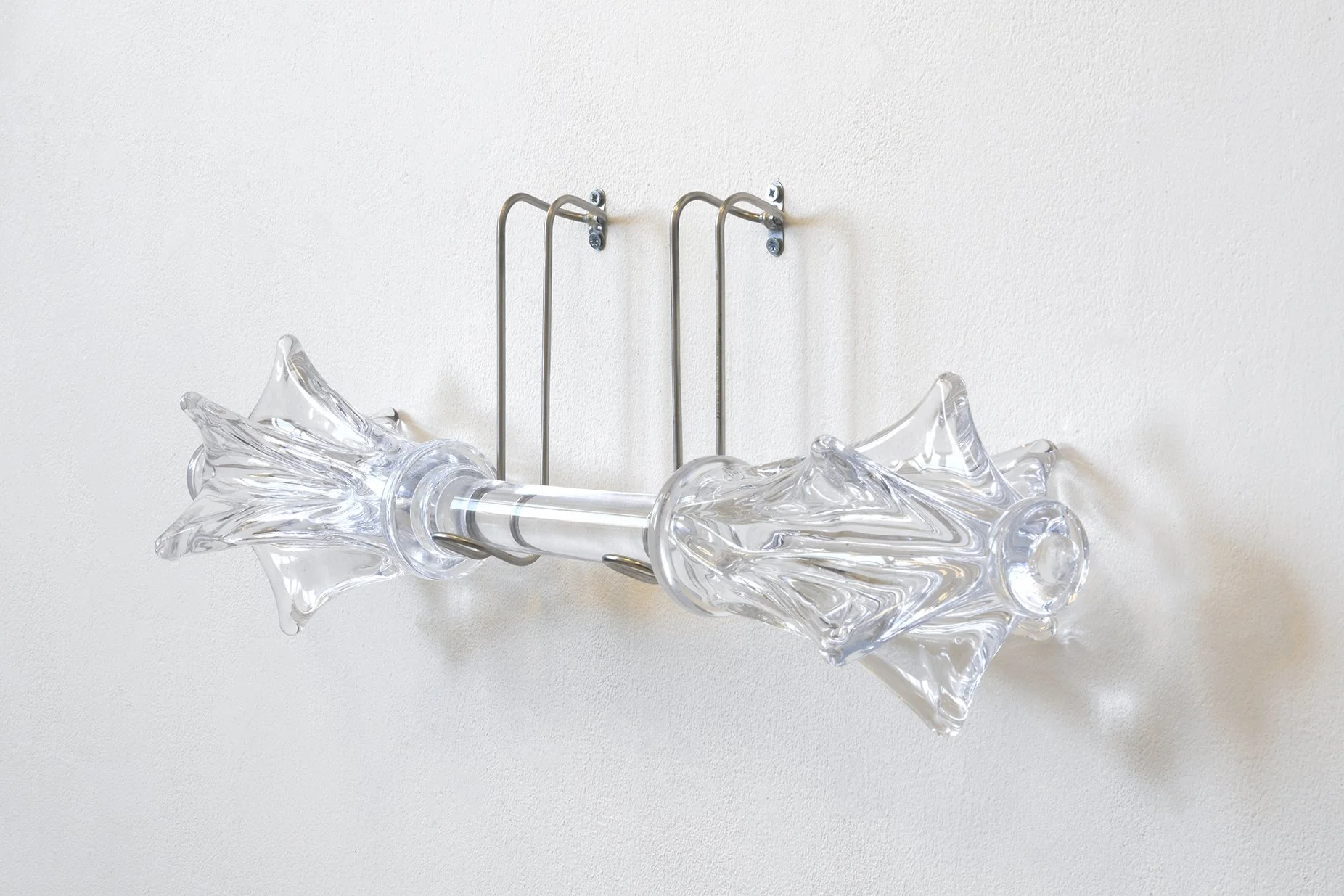
Dumbbell in cast glass, medical retractors
20 x 60 cm width
2020
In Miracle, Varennes creates a sculpture in the form of a glass dumbbell, embodying a double inversion: that of weight and gender. Traditionally associated with strength, physical performance and a virile culture of the body, the dumbbell here becomes a sculpture as dazzling as it is vulnerable - unfit for effort but charged with subversive power. Its transparent, sharp materiality evokes a form of resistance, one that chooses fragility as a critical posture in the face of norms.
Too fragile to be used, this dumbbell questions the social construction of the masculine. It thwarts the expectation of muscle, of surpassing oneself, to highlight the fictions that support these ideals. By replacing weight with light, density with transparency, Miracle proposes another form of power: no longer that of control, but that of disturbance in the appearances and uses assigned to the body. The title Miracle embodies this unexpected rupture. A miracle defies the laws of nature, and here it's the fragile dumbbell that turns the very idea of strength on its head. Instead of a virile performance object, Varennes proposes a sculpture as an act of resistance through fragility. This “miracle” becomes a subtle transgression of gender and power norms, where fragility becomes subversion.
This gesture of fragility echoes the writings of Byung-Chul Han, notably in “The Society of Fatigue”, where he depicts a world where the individual is subjected to constant pressure for self-improvement. By hijacking the traditional object of physical performance, Varennes interrogates this dynamic of virilist self-affirmation as a form of silent resistance. Glass, in its transparency and vulnerability, thus becomes a site of contestation where the breakdown of expectations linked to power opens up a space for a non-visible form of power, based on fragility and letting go, which destabilizes the social and cultural imperatives of control.
Miracle
Dumbbell in cast glass, medical retractors
20 x 60 cm width
2020
In Miracle, Varennes creates a sculpture in the form of a glass dumbbell, embodying a double inversion: that of weight and gender. Traditionally associated with strength, physical performance and a virile culture of the body, the dumbbell here becomes a sculpture as dazzling as it is vulnerable - unfit for effort but charged with subversive power. Its transparent, sharp materiality evokes a form of resistance, one that chooses fragility as a critical posture in the face of norms.
Too fragile to be used, this dumbbell questions the social construction of the masculine. It thwarts the expectation of muscle, of surpassing oneself, to highlight the fictions that support these ideals. By replacing weight with light, density with transparency, Miracle proposes another form of power: no longer that of control, but that of disturbance in the appearances and uses assigned to the body. The title Miracle embodies this unexpected rupture. A miracle defies the laws of nature, and here it's the fragile dumbbell that turns the very idea of strength on its head. Instead of a virile performance object, Varennes proposes a sculpture as an act of resistance through fragility. This “miracle” becomes a subtle transgression of gender and power norms, where fragility becomes subversion.
This gesture of fragility echoes the writings of Byung-Chul Han, notably in “The Society of Fatigue”, where he depicts a world where the individual is subjected to constant pressure for self-improvement. By hijacking the traditional object of physical performance, Varennes interrogates this dynamic of virilist self-affirmation as a form of silent resistance. Glass, in its transparency and vulnerability, thus becomes a site of contestation where the breakdown of expectations linked to power opens up a space for a non-visible form of power, based on fragility and letting go, which destabilizes the social and cultural imperatives of control.