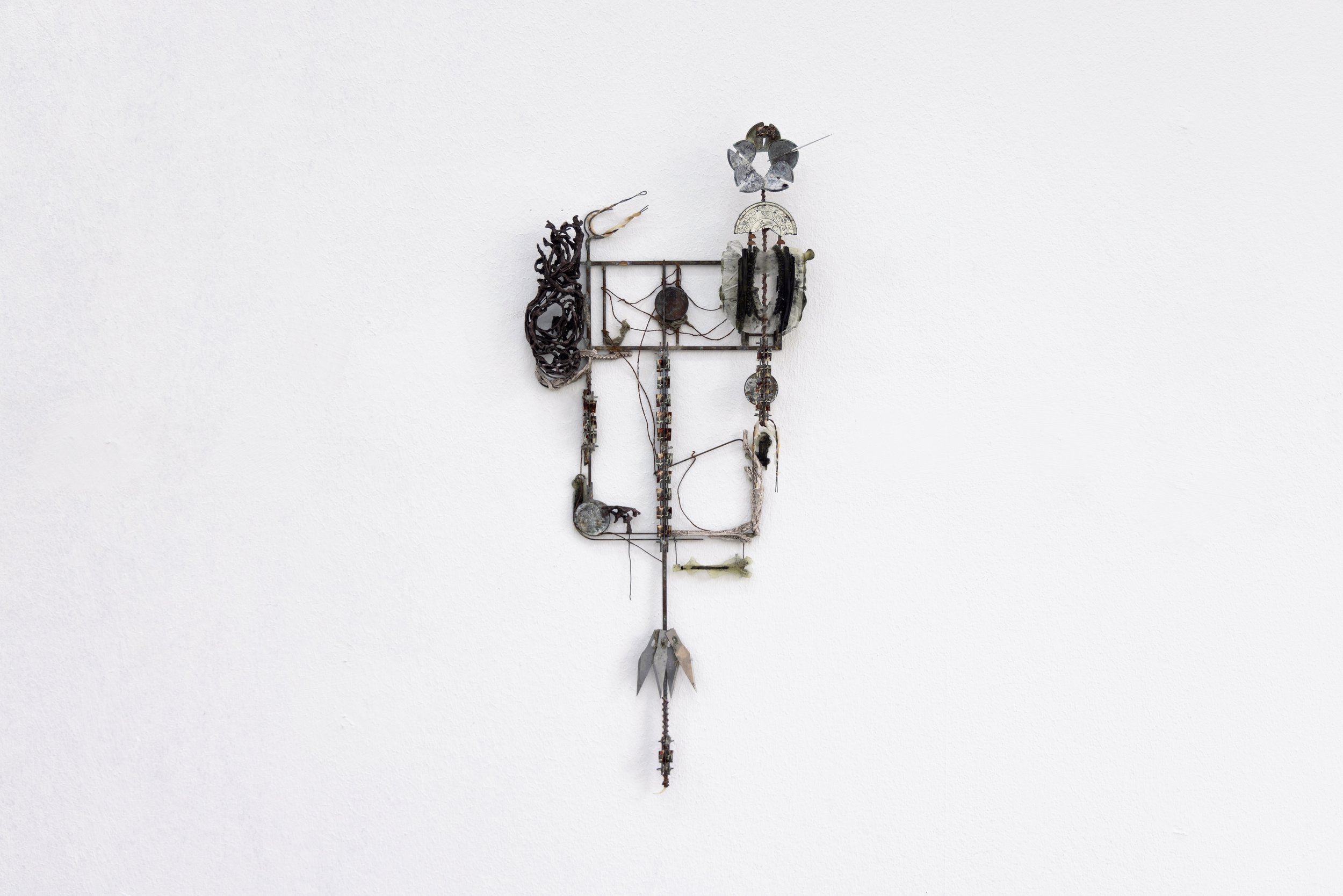
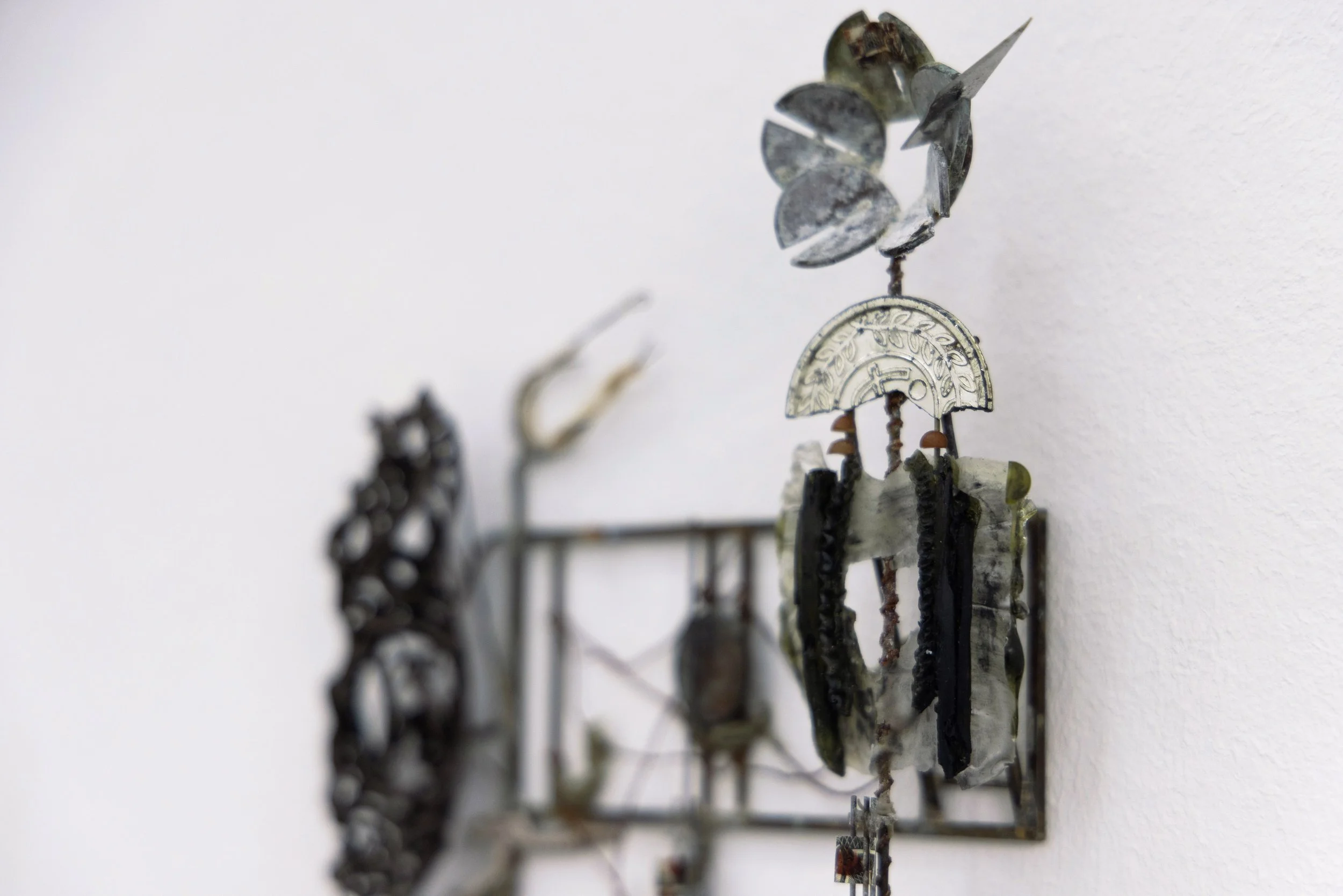


Aegisthus
Soldered brass, wire, carved polystyrene, cast plaster, cast resin, epoxy clay, toilet paper, dried lentils, fingernail clippings, used scalpel blades, found toy coin, pennies, excised fragments from eighteen one dollar bills blotted with the artist's blood.
38 x 16.5 x 4cm
2024
Aegisthus damns a character to commerce.
More often, the work is formal: found objects and cast detail-objects arrange into cumulative assemblages, which fall through a causal chain of balances and offsets to create an all-over, schematic off-rhythm. Much like myth, tragedy, and perhaps aesthetics itself, this model moves through a series of reactions to heterogeneous factors: technical necessity, happenstance, formal choice and artistic code. In my particular model, each subsequent reaction is tempered to either cancel out its predecessor or covertly disrupt an established pattern, a paradoxically additive approach to deduction. Oft including specimens from the artist’s body, these piles of negation gesture at a raw, solipsistic fixation regarding parts, wholes, and their implications for the self, whilst simultaneously continuing this performative thread of hyperbolic torment, itself an undercut, literal detachment.
When the formal pathway is the emphasis, titles tend to serve as passive categories, provisional brackets, or tags. Tragic characters are most often utilised as vessels, troughs into which aspects are tossed.
Aegisthus
Soldered brass, wire, carved polystyrene, cast plaster, cast resin, epoxy clay, toilet paper, dried lentils, fingernail clippings, used scalpel blades, found toy coin, pennies, excised fragments from eighteen one dollar bills blotted with the artist's blood.
38 x 16.5 x 4cm
2024
Aegisthus damns a character to commerce.
More often, the work is formal: found objects and cast detail-objects arrange into cumulative assemblages, which fall through a causal chain of balances and offsets to create an all-over, schematic off-rhythm. Much like myth, tragedy, and perhaps aesthetics itself, this model moves through a series of reactions to heterogeneous factors: technical necessity, happenstance, formal choice and artistic code. In my particular model, each subsequent reaction is tempered to either cancel out its predecessor or covertly disrupt an established pattern, a paradoxically additive approach to deduction. Oft including specimens from the artist’s body, these piles of negation gesture at a raw, solipsistic fixation regarding parts, wholes, and their implications for the self, whilst simultaneously continuing this performative thread of hyperbolic torment, itself an undercut, literal detachment.
When the formal pathway is the emphasis, titles tend to serve as passive categories, provisional brackets, or tags. Tragic characters are most often utilised as vessels, troughs into which aspects are tossed.